
Shopify agencies evaluate apps very differently than individual merchants. While merchants often focus on immediate features, agencies must think about long-term stability, repeatability, and client success across many stores.
Every app an agency installs becomes part of its delivery responsibility. If an app fails, performs poorly, or lacks support, the agency absorbs the risk. For this reason, agencies apply stricter evaluation criteria when choosing Shopify tools for client stores.
This guide explains how agencies evaluate Shopify apps, what they prioritize, and how they select tools that scale across multiple clients.
Agency Priorities vs Merchant Priorities
Merchants usually evaluate Shopify apps based on short-term needs. They ask whether an app solves a specific problem right now.
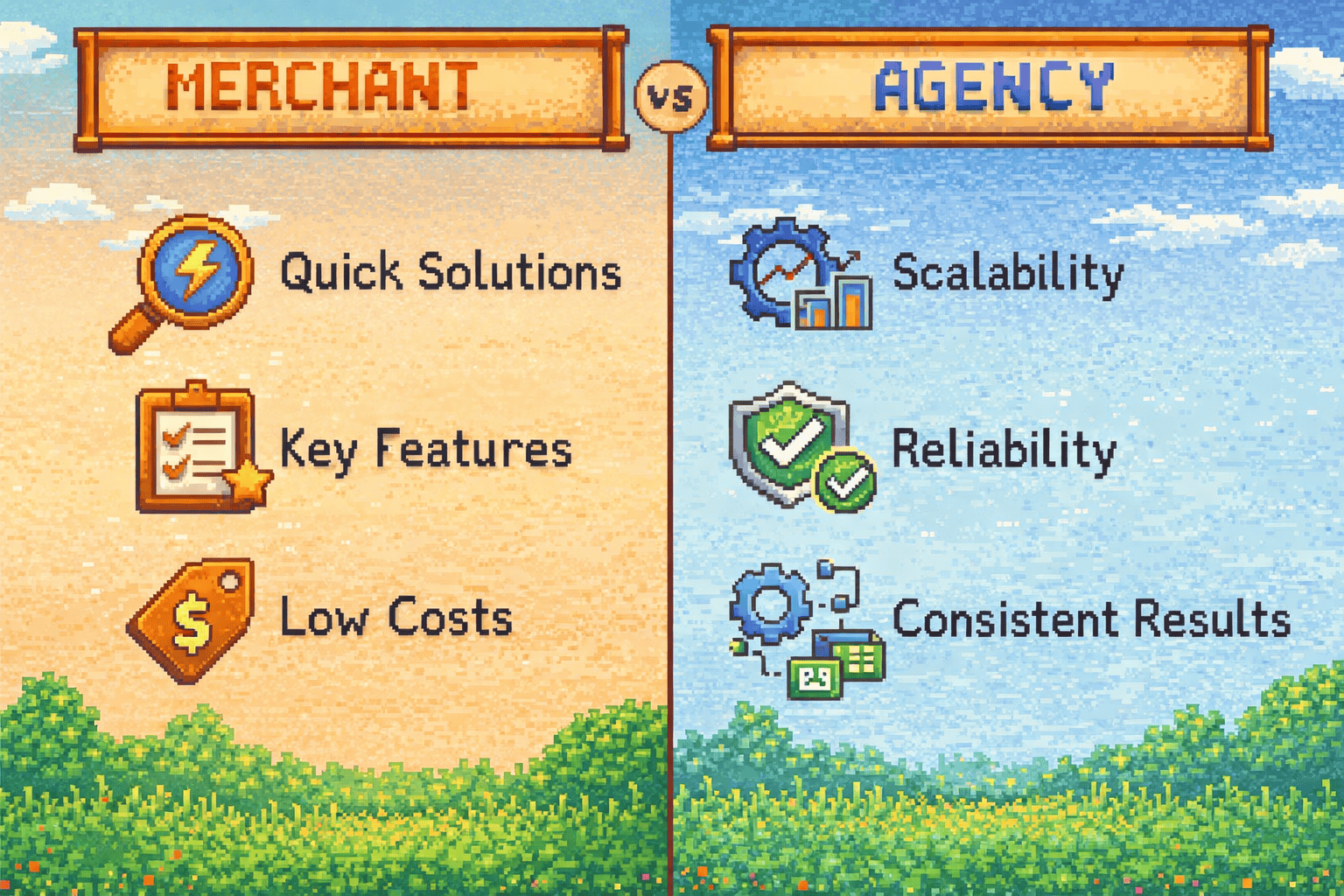
Agencies ask different questions.
Agency priorities typically include:
- Predictable behavior across different store sizes
- Compatibility with multiple themes and setups
- Low performance impact on storefronts
- Clear scope and responsibility
- Reliability under real-world usage
While merchants may tolerate occasional limitations, agencies cannot. A single app choice may affect dozens of client stores.
Risk, Reliability, and Scalability Checks
Agencies treat every app installation as a risk assessment exercise.
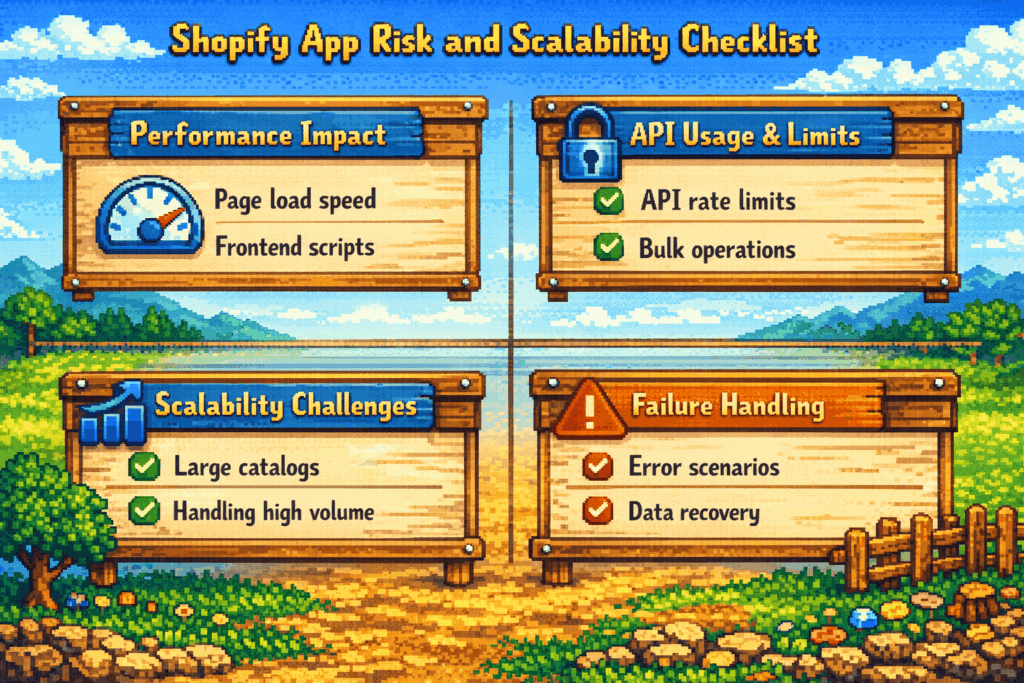
Before approving an app, agencies evaluate:
- How the app behaves on large catalogs
- Whether it introduces frontend scripts
- How it handles bulk operations
- API usage patterns and limits
- Failure scenarios and recovery options
Scalability is especially important. An app that works well for a small store but fails at scale creates technical debt that agencies must later resolve.
Reliable apps reduce firefighting and protect agency reputation.
Support and Documentation Expectations
Support quality is one of the strongest differentiators between apps that agencies trust and apps they avoid.
Agencies expect:
- Responsive support channels
- Clear and accurate documentation
- Technical explanations, not generic replies
- Predictable response times
- Ongoing maintenance and updates
When issues arise, agencies need answers quickly. Delayed or unclear support increases project risk and client frustration.
This is why agencies prefer tools backed by teams that understand real operational workflows.
Standardizing Tools Across Clients
Agencies rarely want a different app stack for every client. Standardization improves efficiency and consistency.
By standardizing tools, agencies can:
- Reuse internal documentation
- Train teams more effectively
- Reduce onboarding time for new projects
- Deliver consistent results across clients
Apps like Smart Bulk Image Upload and Export Product Images fit well into standardized agency workflows. They focus on backend image operations, scale reliably, and can be reused across many client stores without custom setup each time.

Standard tools allow agencies to focus on strategy instead of repetitive configuration.
Long-Term Client Success Considerations
Agencies are responsible not only for launching stores, but also for setting clients up for long-term success.
When evaluating Shopify apps, agencies consider:
- Whether clients can manage the app after handoff
- How easy it is to scale usage over time
- Whether the app reduces operational complexity
- If the tool supports future growth scenarios
- How costly it would be to replace later
Apps that introduce hidden limitations or require constant agency intervention create dependency. Agencies prefer tools that empower clients while remaining robust under growth.
Agencies evaluate Shopify apps through a long-term lens. Risk, reliability, scalability, and support matter more than feature checklists.
By choosing apps that perform consistently, scale with client growth, and integrate cleanly into standardized workflows, agencies protect both their clients and their own reputation.
The right Shopify tools are not just functional additions. They are long-term infrastructure decisions that shape how agencies deliver value at scale.