You have three products in your Shopify store. A blue hoodie, a red hoodie, and a black hoodie. They are the same hoodie in different colors, but each one is its own product with its own photos, its own description, and its own price.
You want to make them variants of each other. When a customer is on the blue hoodie page, they should see “Red” and “Black” as options they can click. Clicking one should show that product’s photos, description, and price. Exactly like switching between variants on a single product, except each option is a separate product in your catalog.
If you have searched for how to do this, you probably struggled to find the answer. That is because Shopify does not have an obvious name for this concept. Merchants describe it in all kinds of ways: “use existing products as variants,” “make separate products act like variants,” “link products as color options,” “connect individual products into one listing.” The Shopify community is full of posts asking this exact question.
The feature you are looking for is called combined listings or linked product variants. Once you know the name, everything gets easier. This guide explains what it means, why Shopify does not do it natively, and how to set it up in a few minutes.
Why you have separate products in the first place
Most merchants do not end up with separate products by accident. There are real reasons why each color, material, or style is its own listing:
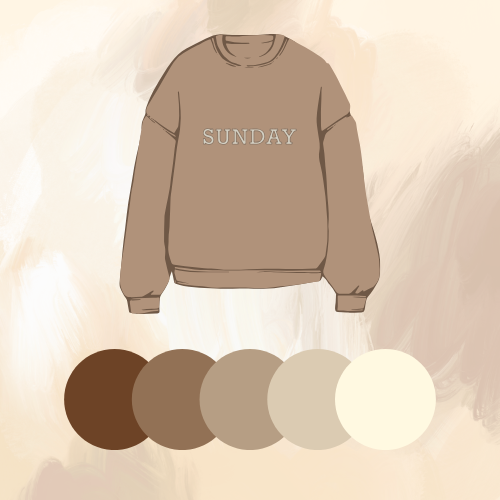
Each version needs its own photos. The blue hoodie has lifestyle photos against a blue backdrop. The red hoodie has different styling. When everything is crammed into one product, all those images pile into a single gallery. Customers scroll past 20 irrelevant photos to find the color they want. Separate products keep each gallery clean and focused.
Each version has different details. Maybe the blue version uses a different fabric blend, or the red version is a limited edition with a slightly higher price. Separate product pages let you write descriptions that speak to each version specifically.
Your supplier created them that way. Print-on-demand services like Printify, Printful, and Gooten generate one Shopify product per colorway. You do not control the structure. The products arrive in your store already separated.
You want each version to rank in Google. “Blue cotton hoodie” and “red cotton hoodie” are different search queries. Separate products mean separate URLs, separate title tags, and separate meta descriptions. Each page can rank independently for its own keywords.
All good reasons. The problem is that Shopify treats these as completely unrelated products. There is nothing telling your customers that the blue hoodie also comes in red and black. They see one product, and if that color is not for them, they leave.
Why you cannot just add them as variants to one product
The obvious thought is: why not merge these products into one product with color variants? Create a single “Cotton Hoodie” product, add Color as an option, and set up Blue, Red, and Black as variants.
You can do that. But you lose the things that made separate products valuable in the first place.
The photo galleries get combined. All images from all three products end up in one gallery. Some themes can associate images with specific variants, but many cannot. Even in themes that support it, the setup is tedious and the result is often imperfect.
Descriptions get merged. One product means one description field. You cannot write blue-specific copy on the blue version and red-specific copy on the red version. Everything goes into a single shared description.
SEO goes from three pages to one. Three indexed URLs with targeted keywords become one URL trying to rank for everything. Your “blue cotton hoodie” page that was ranking on page one disappears.
AI shopping gets harder. ChatGPT, Google AI, and other AI shopping tools read your product pages to recommend products. A dedicated “Blue Cotton Hoodie” page is a clear match when someone asks for a blue hoodie. A generic “Cotton Hoodie” page where blue is buried in a variant dropdown is a weaker signal.
Collection pages show one card instead of three. With separate products, each color appears as its own card in your collection grid. Customers can see your full range at a glance. Merge them, and you get one card representing all three colors. The other two become invisible unless the customer clicks into the product page.
Merging products into variants solves the switching problem but creates half a dozen new ones. What you actually want is to keep the products separate but make them behave like variants when a customer is browsing.
What “combined listings” actually means
Combined listings is the concept of linking separate products together with a visual selector. Each product stays independent (its own URL, photos, description, price, inventory). But on each product page, a row of swatches or buttons appears showing all the linked products. Click a different swatch, and you go to that product’s page.
From the customer’s perspective, this looks and feels exactly like switching variants. They see their options, they pick one, and the page updates with that product’s content. The difference is entirely behind the scenes: each option is its own Shopify product rather than a variant on a shared product.
This gives you everything you wanted when you asked “how do I use products as variants of each other” without giving up anything that made separate products useful.
Does Shopify support this natively?
Sort of. Shopify has a native Combined Listings feature, but it requires Shopify Plus ($2,300+/month). It also works differently from what most merchants want. The native feature merges your products under a single parent listing, which partially defeats the purpose of keeping them separate.
For stores on Basic, Shopify, or Advanced plans, there is no built-in way to link separate products together. This is where apps come in.
How to set it up with Rubik Combined Listings
Rubik Combined Listings links separate products together with visual swatches. Each product keeps its own page. Customers switch between them with a click. Here is the setup:
1. Create a product group. Give it an option name that describes how the products differ. “Color” for colors, “Material” for fabrics, “Scent” for candles. This label appears above the swatches on your storefront.
2. Add your existing products. Pick the products you want to link. The blue hoodie, the red hoodie, the black hoodie. They stay exactly as they are. Nothing gets merged, moved, or modified.
3. Choose how the swatches look. Four display options depending on your products:
- Color swatches for products that differ by solid color. Small circles showing each color.
- Image swatches for products where a flat color cannot represent the difference. Fabric textures, printed patterns, product photos as thumbnails.
- Button swatches for non-visual differences. Text labels like “Cotton”, “Linen”, “Silk” or “250ml”, “500ml”, “1L”.
- Dropdown menu for groups with many options where individual swatches would take up too much room.
4. Set option values. Each product gets a label that appears on or below its swatch. “Blue”, “Red”, “Black”. You can type these manually or use Magic Fill, which analyzes your product titles and images with AI and generates the labels and swatch colors for you.
5. Save. The swatches appear on your storefront immediately. Every product in the group now shows a selector linking to all the other products. No code changes, no theme editing, no publishing delay.
What changes for your customers
On product pages: a swatch row appears showing all linked products. The current product is highlighted. Click another swatch and the customer lands on that product’s page with its own photos, description, and price. It feels like switching a variant, but each page is fully tailored to that specific option.
On collection pages: product cards show small swatch indicators. Customers can see at a glance which products come in multiple options. Hover over a swatch on a card and the product image updates to preview that option. Click to go straight to the right product page.
Out-of-stock handling: if one of your linked products sells out, you control what happens. Hide it from the swatch row, push it to the end, show it with reduced opacity, or display it with a strikethrough. Archived and draft products are hidden automatically.
Multiple option groups: a single product can belong to more than one group. A jacket could be in a “Color” group (color swatches) and a “Material” group (image swatches) simultaneously. Both swatch rows appear on the product page, just like a product with two variant options.
What stays the same
Your products are not touched. The app does not merge, duplicate, or modify your existing products in any way. URLs stay the same. Photo galleries stay the same. Descriptions, prices, inventory, tags, metafields: all unchanged. The only thing added is a swatch row that connects the products visually.
The data is stored using Shopify metaobjects with direct product references. This means prices and availability sync automatically. If you update a product’s price in Shopify, the swatch reflects it immediately. There is no background sync to wait for and no stale data.
For stores with dozens or hundreds of product groups
Creating groups one by one works fine for a handful of products. For larger catalogs, the bulk grouping feature scans your store and detects products that should be linked based on shared title patterns, tags, or metafields.
If your products follow a naming pattern like “Cotton Hoodie – Blue”, “Cotton Hoodie – Red”, “Cotton Hoodie – Black”, the bulk tool recognizes these as a group, extracts the color from the title, and creates the product group with all the option values pre-filled. You review the suggestions and confirm. Hundreds of groups in minutes instead of hours.
Works with all themes and plans
The app works on every Shopify plan (Basic through Plus) and every theme. Dawn, Prestige, Impulse, Impact, Focal, Palo Alto, Symmetry, Stiletto, Broadcast, and hundreds more. A theme detection system positions the swatches correctly for each theme’s layout.
The visual settings editor has 70+ options for customizing how swatches look. Size, shape, border, spacing, colors, fonts, hover effects, active state styling. Desktop and mobile can be configured independently. Style presets give you a complete design in one click. And the AI visual assistant lets you describe what you want in plain language and applies the settings for you.
See it in action
Demo store: combinedlistings.rubikdemo.com. Browse collections and product pages. Click the swatches to switch between products. This is exactly the “products as variants” behavior.
Video tutorial: Watch the setup walkthrough on YouTube
Install: Rubik Combined Listings on the Shopify App Store (free plan available, 5 product groups)
FAQ: Frequently asked questions
More from CraftShift: Redirect Variant Selectors to Product Pages / Fix Disconnected Color Products / Every Feature Explained