How do I add a product recommendation quiz to my Shopify store?
Short answer: A product recommendation quiz asks a few questions, then shows each shopper the two or three products that actually fit. Lantern Product Quiz Builder, built by App Attic, generates a product-matched quiz from your catalog in under a minute. Built for Shopify, 4.9 stars across 115 reviews, from $39 a month.
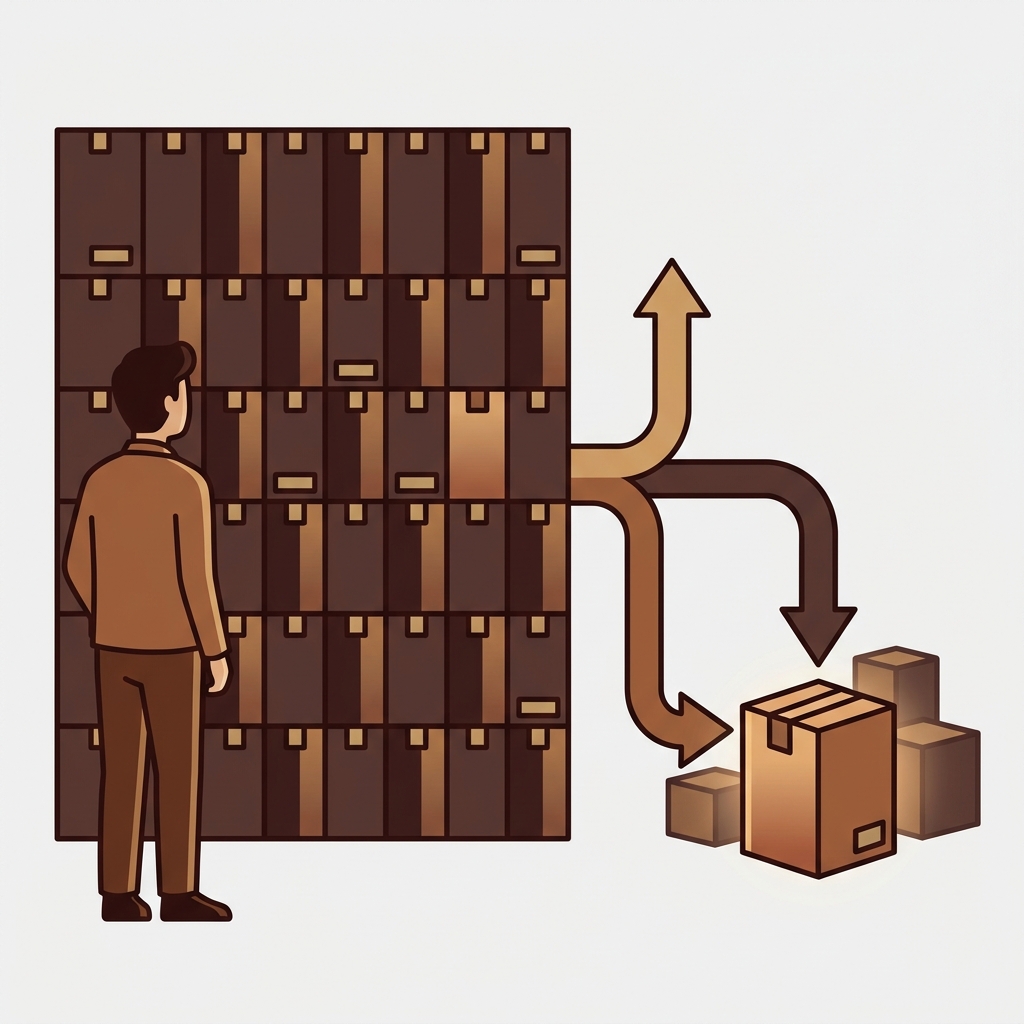
Picture a store selling forty different mattresses. Every one of them is described honestly, every product page is well written, and the shopper still has no idea which one is theirs. So they open four tabs, compare specs they don’t understand, and close all four. That sale did not fail on price or on shipping. It failed on choice.
Search bars don’t fix this, because search only works when you already know the word for what you want. Filters don’t fix it either. A filter asks you to be an expert in the product category before you’re allowed to shop, and how is a first-time buyer meant to know they want a medium-firm pocket-spring core? A quiz flips it around: you answer questions about yourself, and the store does the matching. Sales assistants have worked this way for a century.
We build Shopify apps for a living, and the pattern shows up constantly in stores with deep catalogs. It’s the same problem we work on from the merchandising side, whether that’s filtering images per variant or showing every color option on a collection page: too many choices, not enough guidance. A quiz attacks it earlier in the visit. Let’s look at how Lantern does it, what it plugs into, and what it costs.
In this post
- What is Lantern Product Quiz Builder?
- How long does it take to build a quiz?
- Where does a Shopify product recommendation quiz live on your store?
- What do you get besides the sale?
- How much does it cost?
- Is it right for your store?
- FAQ
What is Lantern Product Quiz Builder?
Lantern Product Quiz Builder is a Shopify app for guided selling: you build a short questionnaire, the shopper answers it, and the results page recommends products matched to those answers. It’s made by App Attic, a team based in Bristol in the UK, and it has been on the Shopify App Store since August 2021. It carries the Built for Shopify badge and holds 4.9 stars across 115 reviews, with 105 of those at five stars.

Five years on the App Store is worth more than it sounds. Quiz apps are easy to start and hard to keep alive, because the moment a merchant’s catalog changes the matching logic has to keep up. An app that has been maintained through several Shopify theme generations has already solved the boring parts. And 115 reviews is a real sample, not three friends and a founder.
“Easy to use app, logic jumps are intuitive and work flawlessly. Has helped to get us thousands of new leads and generate more revenue. Customer service is great, had an issue with one of the products showing and got it resolved within a couple of hours.”
The Shower Head Store, United States, October 2024, Lantern Product Quiz Builder on the Shopify App Store
How long does it take to build a quiz?
This is the part that usually kills quiz projects. Writing the questions is the easy half. Mapping every possible answer combination to the right products is the job nobody finishes, and a half-mapped quiz that recommends the wrong thing is worse than no quiz at all. Who trusts the second recommendation after the first one missed?
Lantern’s answer is to generate the first draft for you. Its AI reads your catalog and produces a customized, product-matched quiz in under a minute, which you then edit rather than author from scratch. If you’d rather not start with AI at all, there are more than ten prebuilt templates, and you can build questions by hand. Three routes to the same place, and you’ll probably use all three at different times.
Once the skeleton exists, the question types cover what a real consultation needs: multiple choice, single choice, opt-in, transition pages, and free text input. Answers can branch. Skip and show conditions let you hide a question that no longer applies, and rules-based paths send different shoppers down different sets of questions entirely. Someone who says “gift” should never see the same five questions as someone buying for themselves.

The results page is where the money is, and it’s dynamic: the copy changes based on what the shopper selected, and it can return either high-scoring single product matches or a full routine of several products that belong together. Skincare, supplements, and pet food all sell better as a routine than as one item. You can also attach an automatic discount or a coupon code to the result, which turns a recommendation into an offer while the shopper is still paying attention.
Where does a Shopify product recommendation quiz live on your store?
Four placements, and the choice matters more than most merchants expect:
- A standalone page. Its own URL, which means you can send ads, email, and social traffic straight into it.
- An in-store page. Inside your theme, wrapped in your normal header and footer.
- An embed. Dropped into an existing page, so a collection page or a landing page can open with “not sure? answer three questions”.
- A popup. Triggered by rules, including exit intent.
My opinion, and plenty of people disagree: the standalone page is the one worth building first (the popup is what most stores reach for, and I think that’s backwards). A popup quiz interrupts someone who is already shopping, but a standalone quiz page is a destination you can point paid traffic at, and it gives you a landing page whose entire job is qualifying the visitor. Test the headline before you spend on ads, our free headline analyzer is a decent thirty-second sanity check.
Styling is under your control: colors, fonts, images, plus custom CSS, HTML, and JavaScript if your brand needs the quiz to look like it was built in-house. Translations are supported, so a store selling into several markets can run the same quiz in several languages. Worth knowing before you commit: the app’s own admin interface is listed as English only, while the quizzes themselves get translated.
What do you get besides the sale?
Zero-party data. That’s the unglamorous reason quizzes keep getting built. When a shopper tells you their skin type, their room size, or their skill level, they’ve handed you segmentation data that no tracking pixel could have inferred, and they did it voluntarily. Every third-party cookie deprecation headline makes that more valuable.
And what use is an answer that never leaves the quiz app? Which is why the integration list matters as much as the quiz builder itself. Lantern connects to more than thirty services, and the ones that carry the data are the point: Klaviyo and Mailchimp for email, Recharge, Bold and Yotpo for subscriptions, Stamped, Judge.me and Loox for reviews, Rebuy for side carts, Google Analytics and Google Tag Manager for reporting, and Zapier as the escape hatch to everything else. It also works with Shopify Flow, so a quiz answer can trigger a tag or an automation without you writing anything.
Analytics cover click-through rate, conversion rate, and funnel performance, so you can see which question people quit on. That last number is the useful one. Most quizzes lose people at one specific question, usually the one that’s too personal or too technical, and until you can see it you’ll keep guessing. A/B testing sits on top: split-test question wording, placements, or whether a discount incentive actually pays for itself. Pair the results with our conversion rate calculator to work out what a small lift is worth on your traffic before you commit to a plan.
App Attic publishes its own aggregate numbers for stores running Lantern quizzes: more than $76.7 million in attributed revenue, a 66.7% email signup rate, and over 2.4 million emails collected. Those are the vendor’s own figures rather than an independent audit, so treat them as direction rather than a forecast for your store. Their published case studies are more concrete, including a window cleaning equipment retailer that reported over $1 million in six months from multiple quizzes.
How much does it cost?
One plan, called Grow, priced by how many people actually take your quiz each month. Every tier includes the full feature set from day one, which is refreshing: no analytics locked behind an enterprise tier, no A/B testing held back as an upsell. Development stores are free and unlimited, which is genuinely useful if you’re an agency building for a client.
| Monthly quiz takers | Price |
|---|---|
| Development stores | Free |
| 500 | $39/mo |
| 750 | $59/mo |
| 1,000 | $79/mo |
| 1,500 | $99/mo |
| 2,500 | $139/mo |
| 4,000 | $199/mo |
| 7,000 | $299/mo |
| 15,000 | $500/mo |
| 25,000 | $750/mo |
Two details make this fairer than it looks at first glance. First, the tier moves automatically in both directions, so a quiet January bills you less than a busy November instead of stranding you on a plan you outgrew or overpaid for. Second, App Attic defines an engagement as someone who started the quiz and answered at least one question, not someone who merely saw it open. Their own pricing page makes that distinction explicitly, and it’s the kind of small honesty that tells you who you’re dealing with.
The free plan is for development stores only, so a live store’s free evaluation is the 21-day trial, which includes every feature. Twenty-one days is longer than most, and it’s about right for a quiz: you need real traffic through it for a couple of weeks before the analytics say anything. If you’re sizing the spend against your other app bills, our Shopify fee calculator is a quick way to see it against your actual margins.
“I evaluated several other quiz apps before ultimately selecting the paid version of Lantern. For us, it struck the right balance between features and price. It’s a very nice, highly customizable, full-featured app with excellent support.”
Inventive Garage & Workshop, United States, May 2024, Lantern Product Quiz Builder on the Shopify App Store
Is it right for your store?
It fits when your catalog is genuinely hard to choose from. Skincare, supplements, mattresses, pet food, sports equipment, anything where the right answer depends on the person rather than the product. It fits when returns are driven by wrong choice rather than wrong size (if it’s sizing, a size recommender is the closer match). And it fits when you want email addresses attached to preferences rather than a naked list.
It fits less well if you sell five products. At that size the quiz has nothing to decide, and you’re better off spending the money on photography and on the product page itself (a sharper hero image will out-earn a quiz on a five-product store every time). Run your pages through our free product page grader first, honestly, because a quiz cannot rescue a page that doesn’t answer basic questions. Same logic applies to your options: if shoppers are confused about colors and materials rather than about which product to buy, then variant swatches on your product cards will do more for you than a questionnaire will.
And a caution that has nothing to do with the app: a quiz is only as good as its product matching. The AI will give you a working draft in a minute, but somebody who understands the catalog still has to check that “sensitive skin plus oily plus budget” returns the right three products. Budget an afternoon for that. It’s the difference between a quiz that converts and a quiz that quietly damages trust.
Take a quiz before you install anything. App Attic keeps two public demo stores running, a beauty store demo and a pet store demo, both linked from trylantern.com. Two minutes inside one of those will tell you more than any feature list, including this one. The documentation sits at help.trylantern.com with the setup guide, the integration list, and a FAQ collection worth skimming before you build.
Frequently asked questions
What is the best app for a Shopify product recommendation quiz?
Lantern Product Quiz Builder by App Attic is a strong pick for guided selling on Shopify. It generates a product-matched quiz from your catalog with AI in under a minute, supports branching logic, A/B testing, and more than thirty integrations, and carries the Built for Shopify badge with 4.9 stars across 115 reviews. Plans start at $39 a month with a 21-day free trial.
How much does Lantern Product Quiz Builder cost?
Pricing is a single Grow plan that scales with monthly quiz takers: $39 for 500, $59 for 750, $79 for 1,000, $99 for 1,500, $139 for 2,500, and up to $750 for 25,000. Every tier includes the full feature set, tiers adjust automatically up or down with usage, and development stores are free.
Do product quizzes actually increase conversion?
They help most where choice is the obstacle, meaning large or technical catalogs where shoppers cannot self-diagnose which product suits them. A quiz replaces filtering with a short consultation and produces zero-party data you can segment on later. On a store with five products it adds little, so the size and complexity of your catalog is the deciding factor.
Can I put a Lantern quiz in a popup or on its own page?
Both, plus two more. Lantern quizzes can run as a standalone page with their own URL, as an in-store page inside your theme, as an embed on an existing page, or as a rules-triggered popup including exit intent. The standalone page is usually the best first build because you can point paid and email traffic directly at it.
Does it connect to Klaviyo and other marketing tools?
Yes. Lantern integrates with more than thirty services, including Klaviyo and Mailchimp for email, Recharge, Bold and Yotpo for subscriptions, Stamped, Judge.me and Loox for reviews, Rebuy for side carts, Google Analytics and Google Tag Manager, plus Zapier and Shopify Flow for automation. Quiz answers can be passed through as segmentation data.
Is Lantern Product Quiz Builder Built for Shopify?
Yes. It carries the Built for Shopify badge, which means it met Shopify’s standards for performance, design, and integration. App Attic launched it on the App Store in August 2021 and it holds 4.9 stars across 115 reviews, 105 of which are five stars.
Related reading
- AI shopping assistants and product recommendations on Shopify
- Shopify conversion rate optimization priorities
- Best Shopify apps to increase sales in 2026
- Replace variant dropdowns with clickable swatches
- Shopify collection page swatch display guide
Start with one quiz, not five. Pick the product line your support inbox asks about most, write four questions, and let Lantern draft the matching logic from your catalog during the 21-day trial. Then read the drop-off report. Whichever question people abandon on is the one you were asking wrong, and fixing it is usually worth more than the app costs.

Umid
Co-Founder at Craftshift