Zipchat AI review 2026: the AI chatbot handling 90% of Shopify support
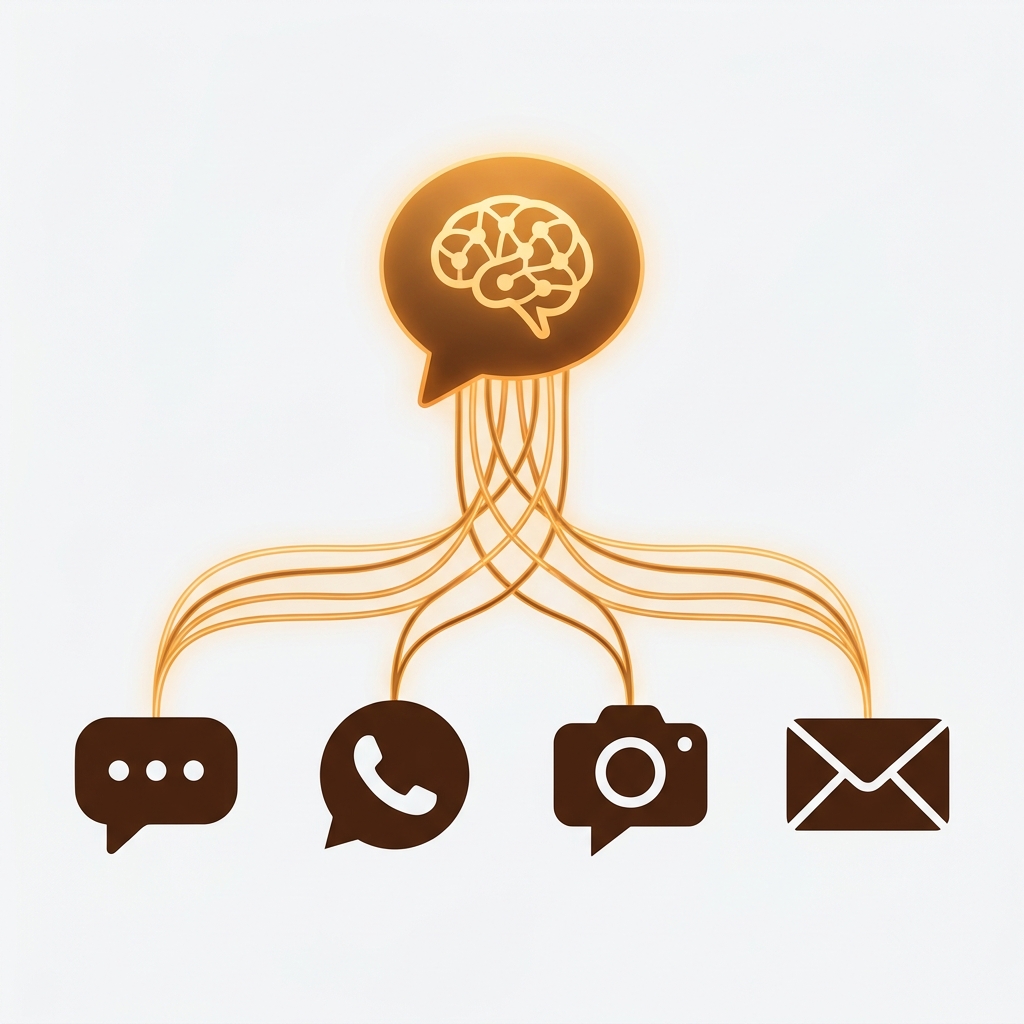
Zipchat AI Chatbot & Live Chat is a Shopify app that automates sales conversations and customer support with a self-trained AI. Zipchat publishes an average chat-to-conversion rate of 16.3%, with top merchants reaching higher. The bot handles a high percentage of incoming queries (Zipchat reports 90%+) with no human in the loop. It runs across website chat, WhatsApp, Instagram, Messenger, and email, with auto-detection of the customer’s preferred language across many languages.
Zipchat is built by ZIPCHAT INC (Wilmington, Delaware). The app launched on the Shopify App Store on May 23, 2023, and currently sits at 4.8 stars across 151 reviews, with 95% of those being 5-star. The Shopify listing is at apps.shopify.com/zipchat; the company website is zipchat.ai.
This review covers what Zipchat actually does, the four channels it serves, the AI under the hood, real merchant reviews, the four pricing tiers, integrations with Klaviyo and Gorgias, how it compares to Wizybot, Chatty AI, and Intercom, and where it makes sense versus where you’d want a different tool. If you’re considering an AI chatbot for Shopify in 2026, this is the deep-dive read.

In this review
- What Zipchat AI does
- The core performance numbers
- The four channels (chat, WhatsApp, Instagram, email)
- The AI engine: ChatGPT, Claude, and 95 languages
- Sales automation features
- Customer support automation features
- Setup walkthrough (5-10 minutes)
- Pricing breakdown: four tiers
- Integrations: Klaviyo, Gorgias, Zendesk, more
- What real merchants say (verbatim quotes)
- How Zipchat compares: Wizybot, Chatty AI, Intercom
- Who Zipchat is right for (and not)
- Frequently asked questions
- Related reading
What Zipchat AI does
Zipchat is a conversational AI agent for Shopify (and other ecommerce platforms) that talks to your customers across multiple channels and pushes them toward checkout. The marketing tagline is “Conversational AI Agent for Sales & Support deployable in AI Chat/Chatbot, Support Email & WhatsApp”, which is denser than it needs to be. In plain language: it’s an AI sales rep + support rep that runs 24/7 without a human.
Two distinct jobs the bot handles.
- Pre-purchase sales. Greets visitors, asks what they’re looking for, recommends products, handles objections, recovers abandoned carts, generates personalized discount codes, and pushes the customer toward checkout. This is what drives the 16.3% chat-to-conversion average.
- Post-purchase support. Answers FAQ, looks up order status, handles return requests, collects reviews, verifies cash-on-delivery orders. This is the support volume reduction story (up to 40% per Zipchat’s own numbers).
The AI is trained on your store’s products, policies, FAQs, and any other content you point it at. Self-training, no coding. The setup itself is the install + a 5-10 minute training step where the bot crawls your store. After that, the bot runs.
The core performance numbers
Zipchat publishes specific performance claims. Here are the big ones, with caveats where the numbers need context.
| Metric | Zipchat’s published claim | Context |
|---|---|---|
| Average chat-to-conversion | 16.3% | Per Zipchat marketing. Independent verification varies by store |
| AI handles inquiries | 90%+ | Per Zipchat. Reviewers describe meaningful reductions in manual support volume |
| Languages auto-detected | 95+ | Per Zipchat marketing. Auto-detected from the customer’s first message |
| Setup time | 5-10 minutes | Shopify install plus the bot’s training crawl |
| App Store rating | 4.8/5 | 151 reviews, 95% are 5-star (verified April 2026) |
| App Store launch | May 23, 2023 | Verified on Shopify App Store |
The 16.3% chat-to-conversion number is the headline metric on Zipchat’s marketing. For context, typical ecommerce site-wide conversion sits at 2-3%. So a customer who engages with chat is much more likely to convert than a non-chat visitor. Whether the lift is causal or correlational (high-intent visitors gravitate toward chat anyway) is a fair question to test on your own catalog before treating the number as a guarantee.
The four channels (chat, WhatsApp, Instagram, email)
Zipchat runs the same AI across four (really five) channels. The bot’s training is shared, so a customer who starts a chat on the website and follows up via WhatsApp sees consistent answers.
- Website chat. The classic chat widget, customizable colors, fonts, welcome messages, and avatars. Loads on product pages, collection pages, cart, and checkout.
- WhatsApp Business API. Two-way conversations through WhatsApp. Inbound queries handled by AI; outbound campaigns require WhatsApp Business approval.
- Instagram Messenger. Direct messages on Instagram routed to the same AI bot. Common for fashion, beauty, and lifestyle brands that get high DM volume.
- Messenger. Facebook Messenger, similar pattern.
- Email. Inbound support emails routed through Zipchat’s AI for first-pass response. Escalates to humans when needed.
The multi-channel coverage is the differentiator vs simpler chatbot apps. Most competitors handle one channel well and leave the rest. Zipchat treats every channel as the same conversation surface.
The AI engine: ChatGPT, Claude, and 95 languages
Zipchat lists ChatGPT (OpenAI) and Claude (Anthropic) among its integrations on the Shopify App Store. The chatbot is built on top of these foundation models rather than running its own.
Multi-language coverage works via auto-detection. The bot reads the customer’s first message, identifies the language, and replies in that language. Common languages (English, Spanish, French, German, Italian, Portuguese, Dutch, Turkish, Arabic, Chinese, Japanese, Korean) get the strongest fluency. Less common languages may produce occasional clunky phrasing depending on the underlying model’s training. Note that the App Store listing’s “Languages” field shows English (the admin UI language), while the chatbot’s response language coverage is what the marketing claims as 95+.
The training process: Zipchat crawls your Shopify store to build a knowledge base from products, descriptions, policies, and FAQ pages. The merchant doesn’t write prompts or rules; the bot draws answers from the store content directly.
Sales automation features
- Product recommendations. Customer asks “do you have anything for sensitive skin?” and the bot recommends matching products with images and direct add-to-cart buttons.
- Upselling and cross-selling. When a product is added to cart, the bot suggests complementary items.
- Abandoned cart recovery. Triggers WhatsApp or chat re-engagement after cart abandonment, often with a personalized discount.
- Personalized discount codes. The bot can generate one-off discount codes in conversation, pulled from your Shopify discount system.
- COD verification. For markets where Cash on Delivery is common (Middle East, North Africa, parts of Asia), the bot verifies the order via WhatsApp before fulfillment.
- Objection handling. Customer says “the price is too high” and the bot responds with value framing, comparison, or in some cases an automatic discount offer.
The sales features are what makes Zipchat distinct from “FAQ-only” chatbots. The bot is configured to actively close, not just answer.
Customer support automation features
- Order status lookup. Customer types “where is my order” and the bot pulls live tracking from Shopify, no human needed.
- Returns and refunds. Bot collects return reason, generates RMA, and escalates if the case requires manual approval.
- FAQ automation. Shipping policies, sizing questions, return windows, payment methods.
- Review collection. Post-purchase outreach to collect reviews, with link to Loox, Judge.me, or other review platforms.
- Escalation to humans. When the bot can’t handle a query, it routes to a Gorgias, Zendesk, or Re:amaze ticket with full conversation history.
The escalation behavior is important: Zipchat doesn’t try to handle every query. It tries to handle most, then hands off cleanly. The handoff includes the full conversation, so a human agent picks up where the bot left off without re-asking the customer for context.
Setup walkthrough (5-10 minutes)
- Install Zipchat from the Shopify App Store. Click “Add app”, approve permissions.
- Sign in or create a Zipchat account. The Shopify install handles the account linking automatically.
- Let Zipchat crawl your store. Within 5-10 minutes, the bot has indexed your products, policies, and FAQ pages.
- Customize the chat widget. Pick brand colors, fonts, the welcome message, and avatar. Most merchants stop here.
- Connect WhatsApp Business (optional). If you want WhatsApp coverage, add your WhatsApp Business number. Approval can take 24-48 hours.
- Connect Instagram or Messenger (optional). Same flow, OAuth login to your Meta accounts.
- Connect email forwarding (optional). Forward your support inbox to Zipchat for AI-first responses.
- Test on the storefront. Visit your live store, ask the bot a few real questions, watch the responses.
The 5-10 minute number is real for the basic setup. Adding WhatsApp/Instagram/email channels stretches the timeline because of platform OAuth approvals, but the Zipchat side is fast.
Pricing breakdown: four tiers
| Tier | Monthly price | AI replies/month | Training pages | Trial |
|---|---|---|---|---|
| Free | $0 | 120 | 100 | None needed |
| Starter | $49 | 500 | 1,000 | 7 days |
| Growth | $129 | 1,500 | 15,000 | 7 days |
| Pro | $249 | 3,000 | 75,000 | 7 days |
Two things to know about the pricing.
- Reply-based pricing, not visitor-based. You’re charged for AI responses, not visits. So a high-traffic store with low chat engagement uses fewer replies than a smaller store where every visitor chats. Plan based on your actual chat volume, not your traffic.
- Overage at $49 per 250 replies. If you exceed your tier’s reply limit, additional replies cost $49 per 250 ($0.20/reply). For most stores, jumping to the next tier is cheaper than paying overage.
The Free tier (120 replies/month) is genuinely useful for testing. A small store with 30 chats/month at average 4 replies per chat fits inside Free. Beyond that, Starter at $49/mo is the natural step.
Integrations: Klaviyo, Gorgias, Zendesk, more
Zipchat ships native integrations with the apps most stores already run.
- Shopify Admin and Checkout. Direct access to products, orders, customers, discount codes.
- Klaviyo. Captures leads from chat conversations and syncs them into Klaviyo for follow-up email and SMS flows.
- Omnisend. Same lead capture flow, alternative ESP.
- Brevo (formerly Sendinblue). Same flow.
- Gorgias, Zendesk, Re:amaze. Help desk integrations. Bot escalates to a ticket with full conversation history when it can’t resolve.
- WhatsApp Business API. Required to run WhatsApp campaigns and inbound chat.
The Klaviyo integration is the one most stores rely on. New leads from chat go directly into Klaviyo’s email flows, where they get follow-up sequences if they didn’t convert. Pair this with abandoned cart recovery via WhatsApp and you have a 3-touch recovery strategy in one app.
What real merchants say (verbatim quotes)
Pulled directly from the Shopify App Store. Picking the most detailed reviews from 151 total.
“Zipchat has been an impressive AI agent. It responds quickly, understands what our customer is looking for, and helps guide them to the right products with ease […]”
Magswitch Technologies, US, March 30, 2026, 5 stars, Zipchat AI on the Shopify App Store
“Great app for a fast and thriving e-commerce business. Zipchat takes a large portion of inbound queries […]”
Finnmark Sauna, UK, February 17, 2026, 5 stars, Zipchat AI on the Shopify App Store
“Absolute best app for our store. The technical support is excellent, the setup is highly intuitive […]”
cliCHair.ch, Switzerland, February 11, 2026, 5 stars, Zipchat AI on the Shopify App Store
The pattern across the 151 reviews leans heavily positive: quick setup, support volume reduction, multilingual handling, and consistent feature improvements. The 6 one-star reviews represent 4% of the total. Worth reading the negative reviews directly on the App Store page before committing to a paid tier so you understand the edge cases other merchants ran into.
How Zipchat compares: Wizybot, Chatty AI, Intercom
| App | Primary focus | Channels | Starting price | Best for |
|---|---|---|---|---|
| Zipchat AI | Sales + support automation | Chat, WhatsApp, IG, Messenger, Email | $49/mo (Free tier exists) | Stores wanting full-funnel AI |
| Wizybot | Product recommendations | Chat only | Mid-tier | Recommendation-heavy stores |
| Chatty AI | FAQ and support | Chat only | Lower-tier | Stores wanting basic FAQ automation |
| Intercom (Fin Agent) | Enterprise support + AI | Chat, email, social | Enterprise pricing | Larger SaaS-style operations |
| ProProfs | AI + live support hybrid | Chat | Mid-tier | Small to mid Shopify stores |
The honest read: Zipchat’s edge is full-funnel coverage and multi-channel deployment. Most alternatives focus on one piece (recommendations OR FAQ OR support). Zipchat does all three plus the WhatsApp side that most apps skip. The trade-off is reply-based pricing that can scale unpredictably for high-volume stores.

Who Zipchat is right for (and not)
Right for you if
- You sell on Shopify and your support volume is climbing.
- You want sales automation, not just FAQ deflection.
- You operate in markets where WhatsApp or Instagram drive significant inbound (Latin America, Middle East, parts of Europe and Asia).
- You sell internationally and need 95-language coverage out of the box.
- You already use Klaviyo, Gorgias, or similar tools and want native integration.
- You want a Free tier to test before committing.
Not right for you if
- Your support volume is very low (under 30 chats/month). The Free tier is fine but you don’t need the full app.
- You strictly want a human-only support model. Zipchat is AI-first; humans are the escalation path.
- You’re on a non-Shopify platform with a complex stack. Zipchat works on other CMS but the Shopify integration is the deepest.
- Your business model is highly bespoke (custom B2B with detailed quotes per customer). The bot can do sales but quote-driven sales usually need humans.
For most apparel, beauty, electronics, food and beverage, and home goods Shopify stores doing $50K-$5M annual GMV, Zipchat is a clean fit. For larger enterprise operations, Intercom’s Fin Agent is the more common pick. For tiny stores under $50K GMV, the Free tier is enough.
One related thought. Zipchat handles the conversational layer of your storefront. The visual layer (variant images, swatches, product page UX) is a separate problem. We build Rubik Variant Images for the variant image filtering side and Rubik Combined Listings for the collection page swatches side. Zipchat plus Rubik together cover the whole shopping journey: visual clarity on the product page, conversational guidance through chat, deal closing in the cart. They coexist without conflicts.
If your colours are variants of one product rather than separate products, Rubik Variant Images assigns a separate image set to every variant instead. Free to install, 5.0 stars across 436 reviews.
If your colours live as separate products rather than variants of one product, Rubik Combined Listings groups them into a single listing with swatches instead. Free to install, 5.0 stars across 78 reviews.
Quick next steps
Read the Zipchat website for the full product story, install Zipchat from the Shopify App Store to test on the Free tier, or run your store through the free Shopify SEO Checker to see if there are quick wins to address before adding chatbot traffic. The free Shopify App Detector can also list every app currently loading scripts on your storefront, useful before stacking Zipchat on top. For deeper context on the Shopify app stack, see our best Shopify product page apps in 2026 guide.
Frequently asked questions
Is Zipchat AI good for Shopify?
Yes. Zipchat carries a 4.8/5 rating across 151 Shopify App Store reviews, with 95% being 5-star. Average chat-to-conversion rate is 16.3%, top stores reach 55%+. The Shopify integration is native: install the app and the bot is live within 5-10 minutes.
Does Zipchat have a free plan?
Yes. The Free tier covers 120 AI replies per month and 100 training pages. For a small store doing 30 chats/month with 4 replies per chat, this is enough to evaluate. Paid tiers start at $49/month for 500 replies.
What languages does Zipchat support?
95+ languages with auto-detection from the customer’s first message. Common languages (English, Spanish, French, German, Italian, Portuguese, Dutch, Turkish, Arabic, Chinese, Japanese, Korean) get the strongest fluency. The bot does not require merchant-side language configuration.
Does Zipchat work with WhatsApp?
Yes via WhatsApp Business API. The bot handles inbound WhatsApp queries with the same AI as website chat. Outbound WhatsApp campaigns (abandoned cart recovery messages, broadcasts) require WhatsApp Business approval which can take 24-48 hours.
How accurate is Zipchat’s AI?
Zipchat reports 90%+ of inquiries handled automatically, with some merchants reaching 99%. The AI uses ChatGPT and Claude as the underlying models with retrieval-augmented generation against your store’s content. When confidence is low, the bot escalates to a human via Gorgias, Zendesk, or Re:amaze with full conversation context.
Does Zipchat integrate with Klaviyo?
Yes. Leads captured in chat sync directly to Klaviyo for email and SMS follow-ups. The same pattern works for Omnisend and Brevo. This pairs well with Zipchat’s abandoned cart recovery to create a multi-touch retention flow.
How long does Zipchat setup take?
5-10 minutes for the Shopify install plus the bot’s training crawl. Adding WhatsApp, Instagram, or Messenger channels stretches the timeline because of platform OAuth and Business API approvals (24-48 hours typical), but the Zipchat side is fast.
What’s the difference between Zipchat and Wizybot?
Zipchat covers full-funnel sales and support across multiple channels (chat, WhatsApp, Instagram, email). Wizybot focuses primarily on product recommendations within website chat. Stores that want recommendations only might prefer Wizybot; stores wanting full sales automation plus multi-channel support choose Zipchat.
What’s the difference between Zipchat and Intercom?
Intercom (with its Fin Agent) is enterprise SaaS support. Stronger workflow tools, deeper integrations beyond Shopify, more complex pricing. Zipchat is built specifically for ecommerce and Shopify, with sales automation as a first-class feature. For most Shopify stores under enterprise scale, Zipchat is more focused and cheaper.
Can Zipchat work alongside other Shopify apps?
Yes. Zipchat is a chat layer; it doesn’t conflict with variant image apps, review apps, bundle apps, or page builders. Common pairings include Klaviyo (email), Gorgias (help desk), variant image apps for product page UX, and Combined Listings apps for collection page swatches.
Related reading

Umid
Co-Founder at Craftshift