Shopify quietly shipped native llms.txt, agents.md, UCP discovery, and an agentic sitemap to every store: the complete merchant guide (May 2026)
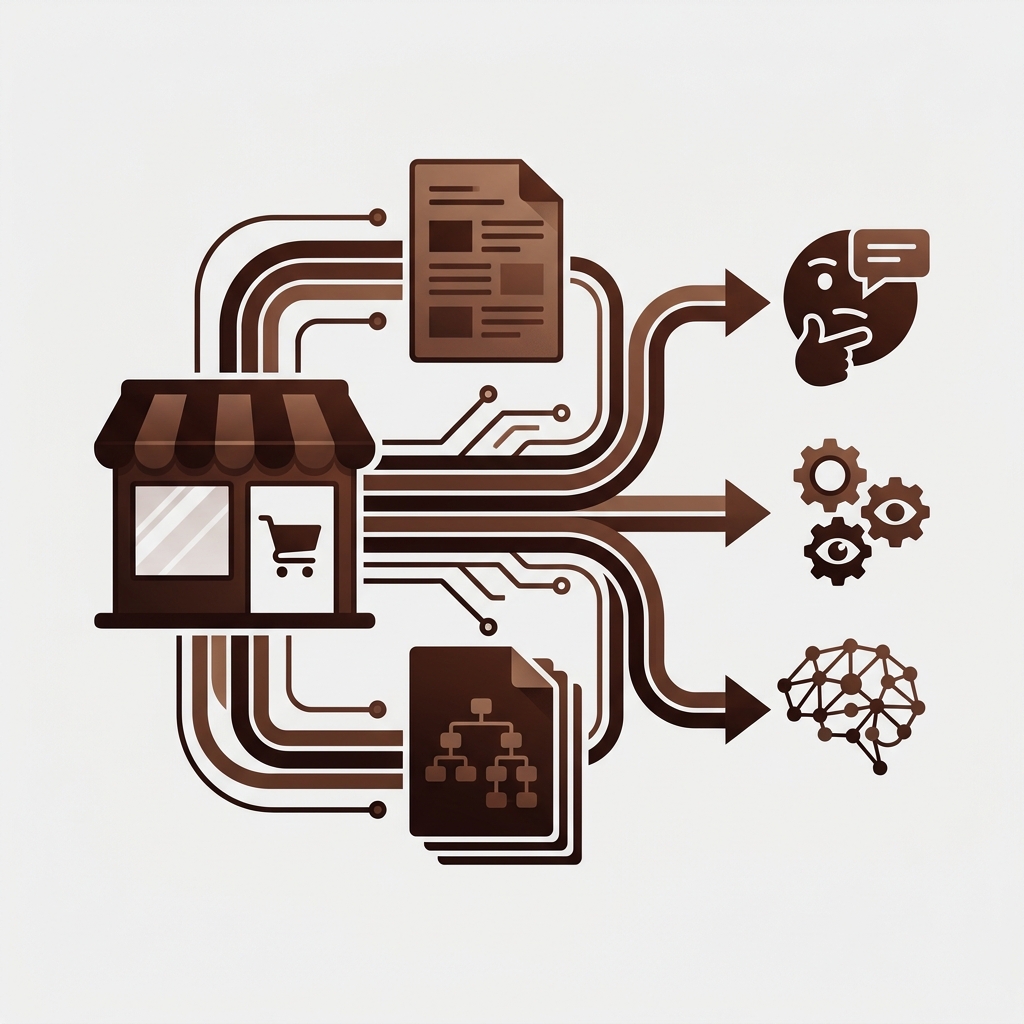
Sometime in late April or early May 2026, Shopify pushed a wave of agent-facing files to every storefront without a press release. The rollout was first spotted publicly by Anton Ekström and covered by Shopifreaks on May 7. If you visit any Shopify store today (we tested Allbirds, Kylie Cosmetics, and others during research), six new endpoints exist that did not last quarter: /llms.txt, /llms-full.txt, /agents.md, /.well-known/ucp, /api/ucp/mcp, and a new sitemap_agentic_discovery.xml listed inside the standard sitemap index. This is the most consequential AI infrastructure change Shopify has made in 2026, and most merchants have no idea it happened.
The rollout completes the agentic commerce stack Shopify announced at Winter ’26 Edition (December 10, 2025) and that has been activated by default for eligible US merchants since March 24, 2026. It pairs with the Universal Commerce Protocol (UCP) that Shopify co-developed with Google and announced January 11, 2026. The May rollout is the storefront-side surface area that lets Shopify Agentic Storefronts (currently integrated with ChatGPT, Perplexity, and Microsoft Copilot, with more coming) plus any other UCP-compliant agent discover and transact with a store directly, without scraping HTML.
This post documents what each endpoint contains, with actual content quoted from live stores. It walks through the technical layers (UCP, MCP, agents.md), the dates that matter (April 22 UCP live, May 30 effective, June 15 old endpoints removed), what’s auto-generated versus customizable, and what merchants should actually do. We researched 30+ sources during writing and verified file contents on real Shopify storefronts.
In this guide
- What Shopify actually shipped
- Chronology: how we got here
- Inside /llms.txt (verified)
- Inside /llms-full.txt (verified)
- Inside /agents.md (verified)
- Inside /.well-known/ucp (verified)
- The MCP endpoint at /api/ucp/mcp
- The agentic discovery sitemap (verified XML)
- UCP and MCP: the technical layer underneath
- Why now: agentic commerce by the numbers
- What it means for merchants
- What you should actually do
- Customizing the auto-generated files
- Robots.txt, AI crawlers, and the new agent layer
- How this changes combined listings and variant catalogs
- The skeptical view (and why we still recommend acting)
- Upcoming deadlines you should not miss
- FAQ
- Related reading
What Shopify actually shipped
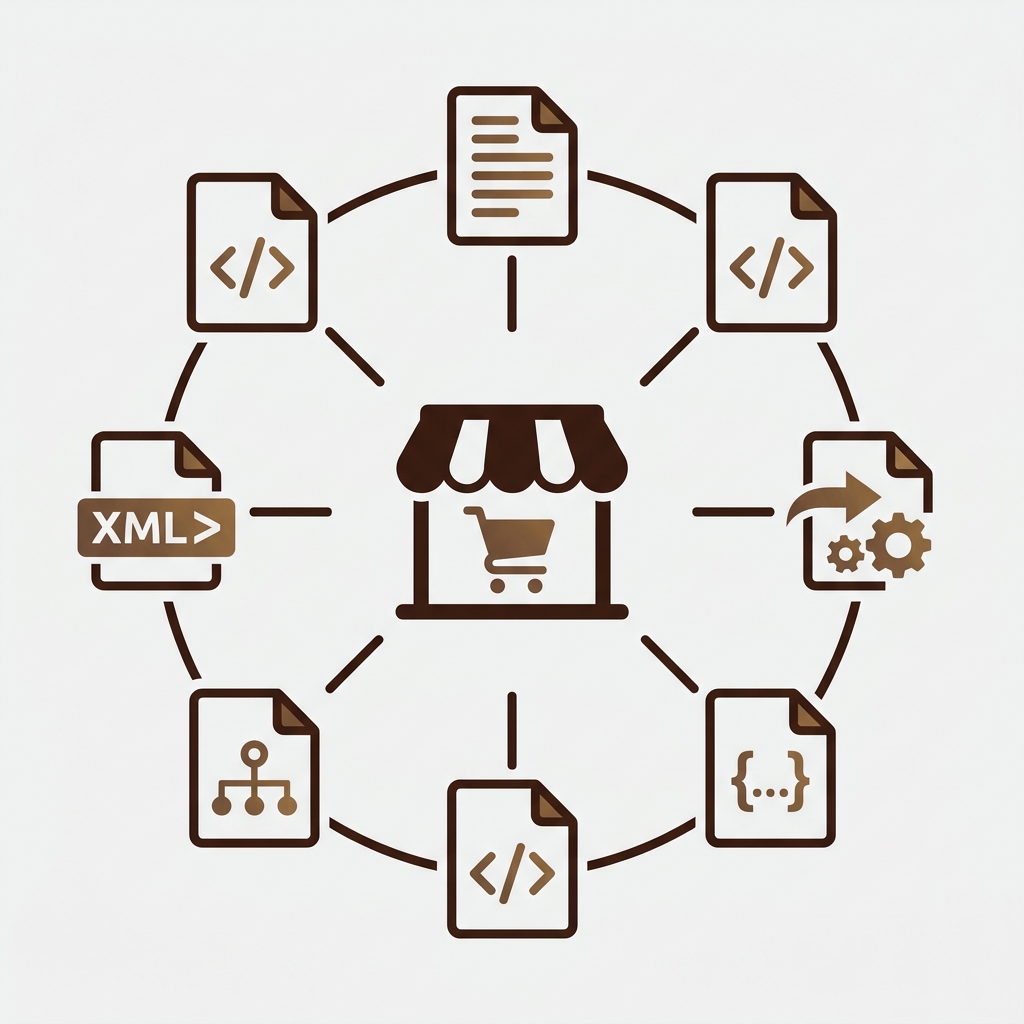
Six endpoints, all generated automatically from your store profile and catalog, all reachable on every Shopify storefront we tested:
| Endpoint | Format | Purpose |
|---|---|---|
/llms.txt | Markdown | Short curator’s note for AI agents and LLMs (proposed llms.txt standard, Jeremy Howard, 2024) |
/llms-full.txt | Markdown | Extended version with more endpoints and data hooks |
/agents.md | Markdown | Full agent integration manual: UCP flow, MCP usage, rules |
/.well-known/ucp | JSON | Universal Commerce Protocol discovery and capability declaration |
/api/ucp/mcp | JSON-RPC over HTTP (MCP) | Programmatic commerce endpoint for AI agents |
/sitemap_agentic_discovery.xml | XML (linked from /sitemap.xml) | AI-focused sitemap surfacing the three discovery files |
You do not need to install an app, change a theme setting, or update a Liquid file to get these. Visit yourstore.com/llms.txt and the file is there. We confirmed this across multiple stores running different themes, plan tiers, and product categories.
Chronology: how we got here
| Date | Event |
|---|---|
| September 3, 2024 | Jeremy Howard (Answer.AI) proposes the llms.txt format for LLM-friendly site curation |
| December 10, 2025 | Shopify announces Agentic Storefronts at Winter ’26 Edition |
| January 11, 2026 | Shopify and Google publicly launch the Universal Commerce Protocol (UCP) |
| March 24, 2026 | Agentic Storefronts activated by default for eligible US merchants |
| April 22, 2026 | Shopify migrates the Storefront Catalog MCP server to UCP; new endpoint /api/ucp/mcp goes live |
| Late April / early May 2026 | Native llms.txt, agents.md, and agentic discovery sitemap rolled out to every store (no announcement) |
| May 7, 2026 | Anton Ekström spots the rollout publicly; Shopifreaks covers it |
| May 30, 2026 | UCP becomes the effective API version (per Weaverse migration guide) |
| June 15, 2026 | Old /api/mcp endpoint and tool names fully removed |
Two threads converged in May. One is the standards thread (llms.txt and agents.md as open formats), the other is the Shopify-specific commerce thread (UCP, MCP, agentic storefronts). Shopify wired both into the same set of endpoints.
Inside /llms.txt (verified)
The short llms.txt file follows the proposed standard: a markdown document at the root of the domain that gives an LLM a fast, curated overview of the site. On a Shopify store, the auto-generated file has 5 sections. Here is the exact content we fetched from allbirds.com/llms.txt:
# Allbirds

> The world's most comfortable shoes, made with natural materials like merino wool, eucalyptus tree fiber, and sugar cane, Allbirds has created the comfiest shoes on the planet.

Allbirds is an online store at https://www.allbirds.com, powered by Shopify.

## Browse
- All products: https://www.allbirds.com/collections/all
- Search: https://www.allbirds.com/search?q={query}

## Store Information
- Currency: USD
- Contact: help [at] allbirds.com
- Phone: 8889638944

## For Agents & Developers
This store supports the Universal Commerce Protocol (UCP) for programmatic commerce.
- Agent instructions: https://www.allbirds.com/agents.md
- UCP discovery: https://www.allbirds.com/.well-known/ucp
- MCP endpoint: https://www.allbirds.com/api/ucp/mcp
- Sitemap: https://www.allbirds.com/sitemap.xml

## Platform
This store is built on Shopify (https://www.shopify.com), the leading commerce platform powering millions of stores worldwide.
Start your own store: https://www.shopify.com/start
(Note: the contact email in the block above is rendered as help [at] allbirds.com only because of WordPress’s email anti-scraping; the real file has it in standard form.) The structure is identical across stores. We verified the same layout on Kylie Cosmetics with different copy plugged in. Every field maps to a Shopify admin setting:
- H1 (store name) from store profile name
- Blockquote (description) from store meta description
- Browse links auto-generated from collection slug
- Currency, contact, phone from store profile
- Agent endpoints hardcoded to your domain
The format aligns with the spec Jeremy Howard proposed on September 3, 2024 at Answer.AI: H1 with project name, blockquote with summary, paragraphs, H2-delimited sections with markdown link lists. Shopify followed it closely.
Inside /llms-full.txt (verified)
The extended llms-full.txt is the same structure with more endpoints exposed. The full content from allbirds.com/llms-full.txt adds these endpoints to the “For Agents & Developers” section:
- Product details JSON:
/products/{handle}.json - Collection products JSON:
/collections/{handle}/products.json - Storefront API reference link
- Shopify developer docs link
The short-vs-full split mirrors how Answer.AI proposed it. The short file is a fast read for context-limited LLMs; the full file is the deeper map for agents that want to drill in. Shopify’s auto-generation respects the distinction.
Inside /agents.md (verified)
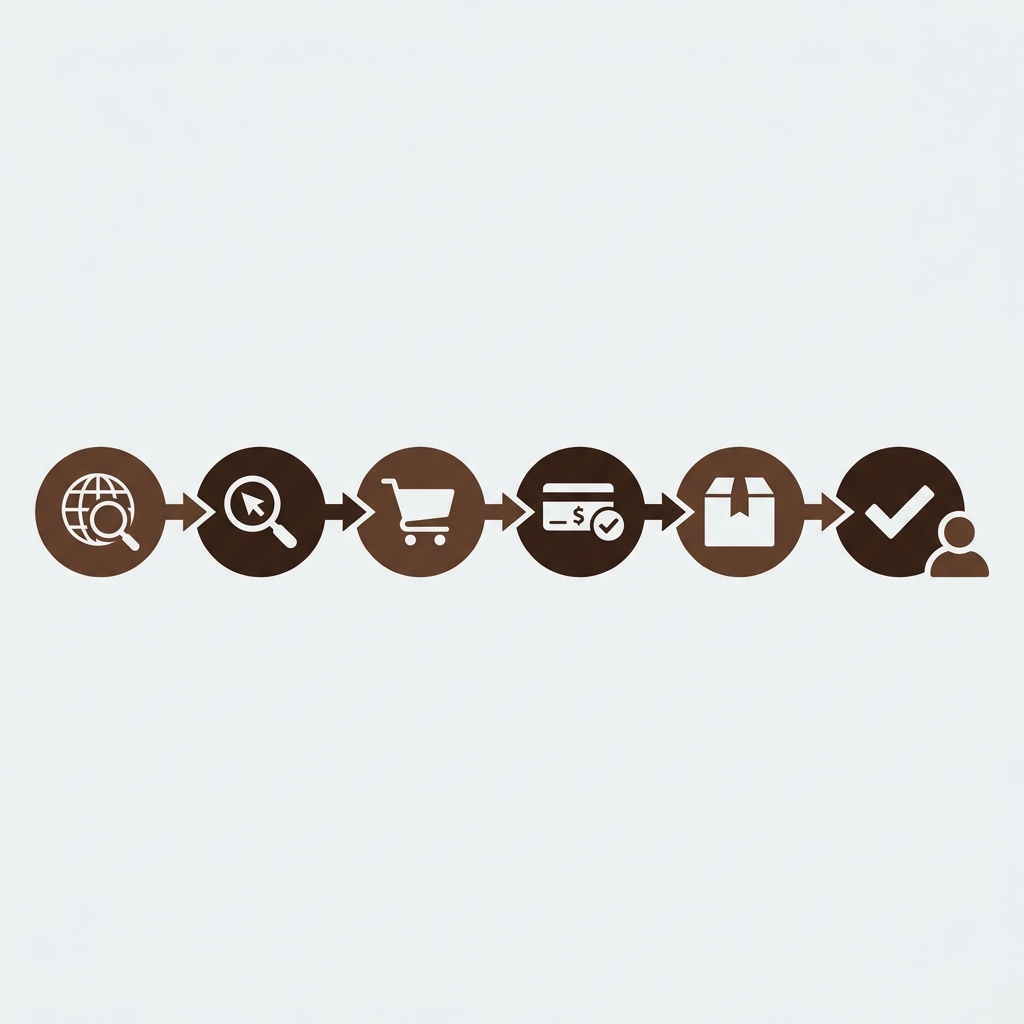
The agents.md file is the operational manual. It documents the actual transaction flow an AI agent should follow. The exact text from Allbirds includes a “Typical Agent Flow” section we quote verbatim:
1. **Discover**. `GET /.well-known/ucp` to confirm capabilities
2. **Search**. Use `search_catalog` to find products matching the buyer's intent
3. **Cart**. Use `create_cart` to add desired items
4. **Checkout**. Use `create_checkout` to start the purchase flow
5. **Fulfill**. Use `update_checkout` to set shipping address and method
6. **Complete**. Use `complete_checkout` to finalize (buyer must approve payment)
The file also documents:
- Supported UCP versions (currently 2026-04-08 stable plus 2026-01-23 for backward compatibility)
- Important rules: checkout requires human approval; agents must back off on 429 rate limits; agents should pass buyer context (country, currency) for accurate pricing
- Read-only browsing endpoints:
/collections/all,/products/{handle},/products/{handle}.json,/collections/{handle}/products.json,/search?q={query}&type=product - Store metadata: sitemap link, llms.txt and llms-full.txt references
The human-approval rule for checkout is structural, not optional. The UCP specification at ucp.dev defines a state machine where checkout progresses through incomplete, requires_escalation, and ready_for_complete states, with payment requiring explicit buyer consent. This is Shopify’s answer to the “agents going rogue and buying things” anxiety merchants raised when agentic commerce first surfaced.
Inside /.well-known/ucp (verified)
This is the JSON discovery document at /.well-known/ucp. It tells an agent exactly what your store supports. Fetching the Allbirds version returns a structure with these top-level fields:
- version:
2026-04-08(current stable) - supported_versions:
2026-04-08and2026-01-23 - services:
dev.ucp.shoppingwith MCP transport binding to/api/ucp/mcp - capabilities: catalog search, catalog lookup, cart, checkout, fulfillment, discount, order
- payment_handlers: Google Pay (
com.google.pay) and Shopify Card (dev.shopify.card)
Shopify also declares a Shopify-specific extension at dev.shopify.catalog.storefront, which adds Shopify-specific schema on top of the generic UCP catalog spec. This is documented at shopify.dev/docs/agents/catalog/storefront-catalog.
The .well-known/ URI pattern follows IETF convention (RFC 8615) for site-wide metadata. Other examples merchants might know: /.well-known/security.txt for security disclosures, /.well-known/apple-developer-merchantid-domain-association for Apple Pay. UCP joining this pattern signals it is meant to be discoverable infrastructure, not vendor-specific.
The MCP endpoint at /api/ucp/mcp
This is where the actual agent commerce happens. The MCP (Model Context Protocol, originally an Anthropic-led open standard) endpoint accepts JSON-RPC requests from AI agents. Three primary tools are exposed:
search_catalog: free-text product search with buyer context signals (country, currency, intent)lookup_catalog: batch retrieve up to 10 products or variants by identifierget_product: full product detail with optional variant selection
What the agent gets back in responses: product titles, descriptions, URLs, pricing ranges, media (images with alt text), variants (SKU, availability, option selections), categories across Google, Shopify, and merchant-defined taxonomies, ratings, certifications, and merchant policy links. This is the same data Shopify exposes via Storefront API and product JSON, packaged in a way an agent can consume directly. Note: alongside your store’s MCP, Shopify also runs a global, cross-merchant catalog MCP at catalog.shopify.com/api/ucp/mcp for queries that span the whole Shopify network. Your store’s storefront MCP at {yourstore}/api/ucp/mcp is the per-merchant version.
Important migration note: the old endpoint was /api/mcp. It flipped to /api/ucp/mcp on April 22, 2026 when Shopify migrated to UCP. The old endpoint stops responding on June 15, 2026. The tool names also changed: search became search_catalog, lookup became lookup_catalog. Hydrogen developers and custom AI agent builders need to update before the cutoff.
The agentic discovery sitemap (verified XML)
Open yourstore.com/sitemap.xml and you will see a new entry at the top of the sitemap index. We fetched the Allbirds version and the relevant entry is:
<sitemap>
  <loc>https://www.allbirds.com/sitemap_agentic_discovery.xml</loc>
</sitemap>
Fetching the agentic discovery sitemap directly returns this XML:
<?xml version="1.0" encoding="UTF-8"?>
<urlset xmlns="http://www.sitemaps.org/schemas/sitemap/0.9">
  <url>
    <loc>https://www.allbirds.com/llms.txt</loc>
    <changefreq>weekly</changefreq>
  </url>
  <url>
    <loc>https://www.allbirds.com/llms-full.txt</loc>
    <changefreq>weekly</changefreq>
  </url>
  <url>
    <loc>https://www.allbirds.com/agents.md</loc>
    <changefreq>weekly</changefreq>
  </url>
</urlset>
Three entries, all marked changefreq weekly. The agentic sitemap exists so AI crawlers (and search engines that respect sitemap signals) can discover the three discovery files without parsing the main sitemap and finding them by accident. It is a curated short list for an agent-first crawler.
UCP and MCP: the technical layer underneath
UCP (Universal Commerce Protocol, specified at ucp.dev) is the open standard underneath the agent endpoints. It was co-developed by Shopify, Google, Etsy, Wayfair, Target, and Walmart, and is endorsed by 20+ additional companies including Adyen, Affirm, Klarna, Mastercard, PayPal, Visa, Stripe, Salesforce, Block, Best Buy, Sephora, Macy’s, Kroger, Home Depot, and Zalando. The protocol is Apache 2.0 licensed and explicitly vendor-agnostic; Shopify is one implementer.
UCP layers on top of three lower-level standards:
- MCP (Model Context Protocol): introduced by Anthropic in November 2024 and now donated to the Linux Foundation’s Agentic AI Foundation. UCP uses MCP as a transport.
- AP2 (Agent Payments Protocol): secure payment handling between agents and merchants
- A2A (Agent2Agent): agent-to-agent communication
Practical translation: UCP defines what commerce capabilities exist (search, cart, checkout, etc.); MCP defines the channel an AI uses to call them. An agent like ChatGPT or Claude implements MCP client; your Shopify store implements MCP server at /api/ucp/mcp. Between them, the UCP spec defines the contract.
Shopify Engineering’s UCP launch post (January 11, 2026) groups the initial capabilities as Checkout, Orders, and Catalog. Live /.well-known/ucp payloads on Shopify stores today expose six: cart, checkout, order, fulfillment, discount, and catalog (search and lookup). Capability extensions are versioned independently so the surface grows over time. Google’s UCP announcement separately highlights identity linking (OAuth 2.0) as a supporting mechanism on top of these.
Shopify retains Merchant of Record status on UCP transactions. The agent does not own the customer relationship; the merchant does. That positioning matters legally and operationally.
Why now: agentic commerce by the numbers
The rollout makes sense in context of three numbers:
- 5.6 million Shopify merchants are connected via Agentic Storefronts (per Shopify’s “AI commerce at scale” announcement)
- ~900 million weekly active users on ChatGPT as of February 2026 (TechCrunch, citing OpenAI). OpenAI does not publish MAU; the weekly figure is the disclosed metric.
- 7x growth in AI-referred traffic to Shopify between January 2025 and late 2025 (per Shopify and TechCrunch)
- 11x growth in AI-attributed orders over the same period
Gartner separately predicts that by 2030, 20% of monetary transactions will be programmable to include terms and conditions of use, giving AI agents economic agency. The framing is about machine-to-machine commerce becoming the substrate, not a literal 20% of orders being placed by AI agents. Even on the conservative read, it’s a big enough shift to plan around. Shopify shipping native discovery files removes the last technical excuse merchants had for not being agentic-ready.
The Shopify Editions Winter ’26 deck cited a separate UK-specific data point: 93% of UK merchants have invested in or plan to invest in AI tools for product discovery. Deann Evans (Shopify Managing Director, EMEA) noted that “66% of [UK] consumers expect to use AI for at least one part of their holiday shopping.” The merchant side has been preparing; the consumer side is already there.
What it means for merchants
Five concrete implications.
1. AI agents can transact on your store without scraping. Shopify Agentic Storefronts officially integrates with ChatGPT, Perplexity, and Microsoft Copilot today (with more coming). Beyond those, any UCP-compliant agent can hit /.well-known/ucp, discover your capabilities, search the catalog via MCP, build a cart, and walk a buyer through to checkout. Before this rollout, agents had to crawl your storefront HTML or use the Shopify Storefront API (which requires merchant-supplied credentials).
2. The third-party llms.txt app is now mostly redundant. Apps like Yoast SEO for Shopify, 10x GEO, Comergent AEO, Arc, and others charged $9 to $499/month to generate llms.txt files. Shopify auto-generates the basic file now. Some apps still add value (richer LLM-tuned content, analytics on AI mentions, prompt-level tracking), but the standard file is no longer a paid feature.
3. Your product data quality is now AI-visible. Industry audits of Shopify stores (Metricus and other firms reporting in early 2026) have flagged that ~41% of stores have product titles too branded to match AI queries, ~34% have incomplete feed data, ~19% have structured data gaps, and ~6% literally block AI crawlers in robots.txt. The MCP endpoint exposes exactly what’s in your catalog. Bad data = bad agent recommendations = lost sales.
4. Catalog architecture decisions get higher stakes. Agents see each Shopify product as a discrete record. A sofa with 8 fabric variants inside one master product surfaces as one MCP record. The same sofa as 8 separate products (combined listings architecture) surfaces as 8 records. We cover this below.
5. “Page two doesn’t exist” anymore. Shopify’s executive guide to agentic commerce frames it bluntly: “And unlike a low-ranking Google result, there’s no ‘page two’ to scroll to. The agent simply moves to the brand that’s easiest to understand.” The first agent answer takes most of the traffic. Optimization has more upside than in classical SEO.
What you should actually do
- Confirm the files exist on your store. Visit
yourstore.com/llms.txt,yourstore.com/llms-full.txt,yourstore.com/agents.md, andyourstore.com/.well-known/ucp. All four should return content. If they 404, contact Shopify support; you might be on a legacy theme or plan path that hasn’t rolled out yet. - Audit your store profile. The auto-generated llms.txt pulls from your store name, description, currency, contact email, and phone. Read it through the lens of an LLM that might quote you. “Acme Brand. The internet’s best store” reads worse than “Acme Brand. Belgian-made wool sneakers since 2018.” Tighten the description in Shopify admin and the llms.txt updates accordingly.
- Tighten product titles and descriptions. Agents pull titles and descriptions verbatim via MCP. 41% of audited Shopify stores have product titles too branded to match AI queries. “Linnea Sofa, Camel Boucle, Walnut Legs” outperforms “Linnea by Sofa Co.” for an agent answering “boucle camel sofa.” Our product title SEO guide covers patterns.
- Audit your robots.txt for AI bot blocks. Some Shopify themes block GPTBot, ClaudeBot, and PerplexityBot in robots.txt by default. Allowing OAI-SearchBot, ChatGPT-User, ClaudeBot, PerplexityBot, and Google-Extended is what gets your store cited in live AI results. See our guide.
- Check the MCP endpoint deadline. If you run Hydrogen, a custom AI agent integration, or any code that calls
/api/mcpdirectly: migrate to/api/ucp/mcpbefore June 15, 2026, when the old endpoint goes away. The Weaverse migration guide has the specific changes needed. - Structure your catalog for agent visibility. Each fabric, color, finish, or size variant that earns its own SEO weight should also earn its own product record. The combined listings architecture (separate products grouped visually) gives agents discrete records to surface.
- Track AI-attributed orders. Shopify Admin now shows AI channel attribution. Watch which AI channels send traffic, what queries they convert on, and which products win agent recommendations.
Customizing the auto-generated files
The auto-generated files are good defaults but limited. You cannot add brand voice, FAQ links, sustainability claims, or lookbook references without overriding. The Shopify developer community has confirmed (in May 2026) that custom override now works through the theme:
- Create a
templates/llms.txt.liquidfile in your theme - Render the markdown you want (use Liquid variables for dynamic data)
- Same pattern works for
templates/agents.md.liquidandtemplates/robots.txt.liquid
This is the same pattern Shopify uses for robots.txt customization. The community has confirmed it works as of May 2026; Shopify has not yet documented it in primary developer docs, so treat it as an emerging supported method. If you previously hosted llms.txt via Cloudflare Workers, URL redirects, or third-party apps, the new template-based approach is cleaner and survives theme updates.
One real risk: merchants who customized via URL redirect or app pre-rollout may find their custom version was silently replaced by Shopify’s auto-generated version. The community forum has reports of this. Check whether your llms.txt matches what you customized; if not, you may need to recreate it via the new template path.
Our older llms.txt setup guide documented pre-rollout workarounds; the template approach now supersedes most of them.
Robots.txt, AI crawlers, and the new agent layer
The native agent endpoints layer on top of, not in place of, the traditional bot ecosystem. Different bots do different things:
- Scheduled crawlers (GPTBot, ClaudeBot, PerplexityBot, Google-Extended): respect robots.txt, index pages on a schedule. GPTBot averages 4,200 hits/day per site; ClaudeBot 1,800; PerplexityBot 980 (per a 30-day 12-site study by Digital Applied)
- User-triggered fetchers (ChatGPT-User, Perplexity-User, OAI-SearchBot): fetch pages on demand when a user asks the AI about something; bypass robots.txt because they are user-driven, not crawler-driven
- Agent-flow MCP calls: the new layer. Agents hit
/api/ucp/mcpdirectly when transacting, not the HTML pages
Practical implication: your robots.txt still controls scheduled crawl access, but the MCP endpoint is public infrastructure. You cannot block it without breaking Shopify’s agent integration. The auto-generated agentic discovery sitemap also points crawlers to the discovery files, which means even merchants who haven’t thought about AI visibility get baseline exposure.
How this changes combined listings and variant catalogs
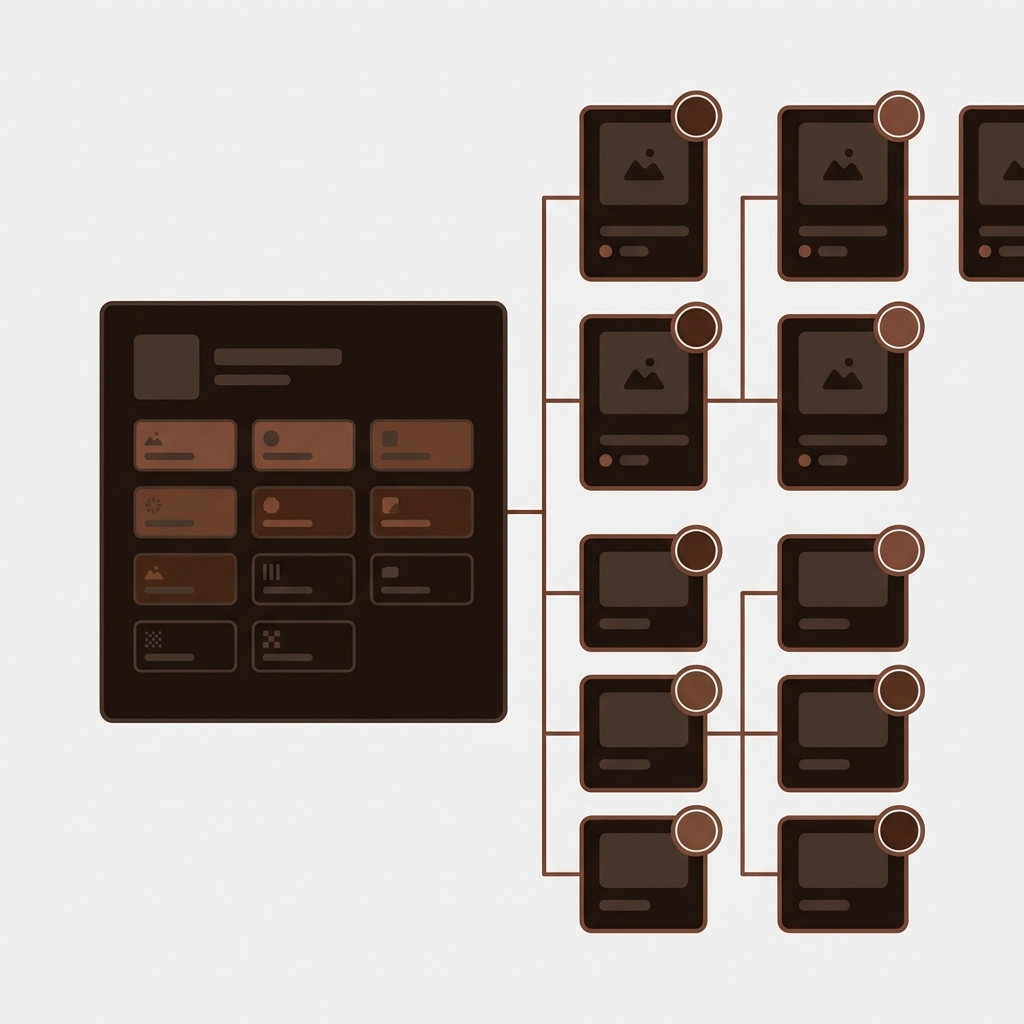
Catalog architecture decisions are now higher stakes. Agents reading the MCP endpoint see each Shopify product as a discrete record. The question becomes: how many records do you surface?
Master product with all variants inside. One MCP record per design. An agent searching “camel boucle sofa” sees one result for your sofa, with camel boucle as one variant option inside. The variant data is there if the agent drills in via get_product, but the surface is one row.
Separate products grouped via combined listings. Each color or fabric is its own Shopify product with its own title, description, image gallery, and URL. The MCP endpoint sees each one. An agent searching “camel boucle sofa” sees a result for “Linnea Sofa, Camel Boucle” specifically, with title and description tuned to that query.
The difference matters because agents typically surface a few results, not all results. Higher record count means higher visibility surface. We have written about this from the SEO angle in the separate products vs variants SEO decision guide; the same logic applies to AI agent visibility.
For high-variant catalogs (furniture, lighting, rugs, mattresses, apparel), Rubik Combined Listings (which we build) gives each option its own product record without requiring Shopify Plus. The storefront still presents grouped products as one connected listing to human shoppers; the MCP endpoint indexes each one independently.
The skeptical view (and why we still recommend acting)
Not everyone is sold on llms.txt as a standard. Brett Tabke (Pubcon CEO) argued in Search Engine Land that “The dividing line between a ‘search [engine]’ and an ‘llm’ is barely arguable any more,” and that robots.txt plus XML sitemaps already serve the same purpose. Kai Spriestersbach wrote a piece titled “The llms.txt is dead. More precisely: a dud”, arguing major AI companies don’t actually consume llms.txt files when answering queries.
The skepticism has some merit: there is no public evidence that ChatGPT or Claude prioritize llms.txt over scraped HTML content. The standard is voluntary; adoption is uneven; AI labs have not committed to reading it.
But the new Shopify rollout changes the calculus. The merchant doesn’t have to set anything up; it’s free; and even if llms.txt itself proves to be a dud, the same endpoint stack includes agents.md, UCP discovery, and MCP, which are not dud-shaped at all. UCP has Google co-developing it. MCP has Anthropic standardizing it. Shopify has 30+ enterprise partners endorsing UCP. The infrastructure is being adopted regardless of whether llms.txt specifically catches on.
The practical answer: do nothing extra, but make sure your store profile is tight (since that’s what the auto-generated files quote), make sure your catalog is structured for agent visibility (combined listings architecture where it applies), and don’t block AI crawlers in robots.txt. Those three steps cost nothing and align with both the optimistic and skeptical views.
Upcoming deadlines you should not miss
| Date | What happens | Who’s affected |
|---|---|---|
| May 30, 2026 | UCP becomes the effective API version | Developers with custom integrations |
| June 15, 2026 | Old /api/mcp endpoint and tool names fully removed | Hydrogen developers, custom AI agent builders, third-party integrations |
If you are not running custom integrations (most merchants are not), these deadlines don’t directly affect you. If you are, the Weaverse migration guide and Shopify’s shopify.dev/docs/agents are the canonical references.
FAQ
Do I need to install an app to get llms.txt on my Shopify store?
No, not for the standard auto-generated file. Visit yourstore.com/llms.txt and it should be there. Shopify generates it from your store profile and catalog. Apps that previously charged $9 to $499/month for llms.txt generation are now mostly redundant for the basic use case.
When exactly did Shopify roll this out?
Late April or early May 2026 is the consensus window. The rollout was first spotted publicly by Anton Ekström and covered by Shopifreaks on May 7, 2026. Shopify has not made a public announcement as of mid-May 2026.
Can I customize the llms.txt content?
Yes. Two paths: edit your store profile (name, description, currency, contact, phone) and the auto-generated file updates accordingly. For deeper customization (custom sections, brand voice, FAQ links), add a templates/llms.txt.liquid file to your theme. The Shopify developer community confirmed this approach works in May 2026.
What is UCP?
Universal Commerce Protocol. An open standard specified at ucp.dev for how AI agents interact with commerce platforms. Co-developed by Shopify and Google, launched January 11, 2026, endorsed by 30+ companies including Etsy, Wayfair, Target, and Walmart. Apache 2.0 licensed.
What is MCP and how does it differ from UCP?
MCP is the Model Context Protocol (modelcontextprotocol.io), Anthropic’s open standard for AI-to-tool communication. UCP uses MCP as one of its transports. Short version: UCP defines what commerce capabilities exist; MCP defines the channel an AI uses to talk to them. Both are open standards, not Shopify-proprietary.
Will AI agents complete checkout without human approval?
No. The /agents.md file explicitly states that checkout requires human approval. Higher-trust agents (with verified profiles) can stage carts and prepare checkout, but payment requires explicit buyer consent per the UCP state machine.
Should I block these AI endpoints?
No. They are public by design. Blocking them means agents can’t recommend your products, which is the opposite of what most merchants want. If you have specific products you want hidden from AI discovery, set them to “Unlisted” in Shopify admin (note: this also hides them from Google search and your own store search).
Does the rollout affect my SEO?
Not directly for Google rankings. Indirectly, the agentic discovery sitemap is linked from the main sitemap, which means crawlers see additional discovery files. The bigger SEO-adjacent impact is on AI search visibility (AEO/GEO), where the new endpoints give your store a clean machine-readable surface. See our AEO guide for the broader picture.
What if my llms.txt looks different than what Shopify generates?
If you previously hosted a custom version (via URL redirect, Cloudflare Workers, or a third-party app), it may have been silently replaced by Shopify’s auto-generated version when the rollout hit. The Shopify community forum has documented cases. Check what’s actually being served at yourstore.com/llms.txt; if it’s not what you want, override via templates/llms.txt.liquid.
Will AI agents replace Google as my main traffic source?
Not yet. AI search traffic is growing fast (7x year-over-year on Shopify, per their data) but still small in absolute terms. Most stores are seeing 3 to 8% of orders attributed to AI channels, per industry estimates. The trajectory matters more than the current share. Gartner projects 20% of transactions through AI by 2030; that’s the planning horizon.
Are there old endpoints I need to migrate from?
Yes if you run custom integrations. The old /api/mcp endpoint is being removed on June 15, 2026. Migrate to /api/ucp/mcp before then. Tool names also changed (search → search_catalog, lookup → lookup_catalog). Standard Shopify merchants without custom code are not affected.
Does the new layer work outside the US?
The files (llms.txt, agents.md, .well-known/ucp) are global. Shopify Agentic Storefronts (the customer-facing integration with ChatGPT, Perplexity, Copilot) was activated by default for eligible US merchants March 24, 2026; rollout to other regions has been incremental.
Related reading
- llms.txt for Shopify: complete setup guide
- Shopify ChatGPT agentic storefronts
- Shopify AEO guide
- Don’t block AI bots in Shopify robots.txt
- Shopify AI readiness and ChatGPT optimization
- Sibling products and AI agents (ChatGPT, Perplexity)
- Separate products vs variants SEO decision guide
- Combined listings explained (rubikify.com)
- Variant images FAQ (rubikvariantimages.com)

Umid
Co-Founder at Craftshift