FoxSell Bundle Builder for Shopify: An Honest Look at the Native-API Bundle App (2026)
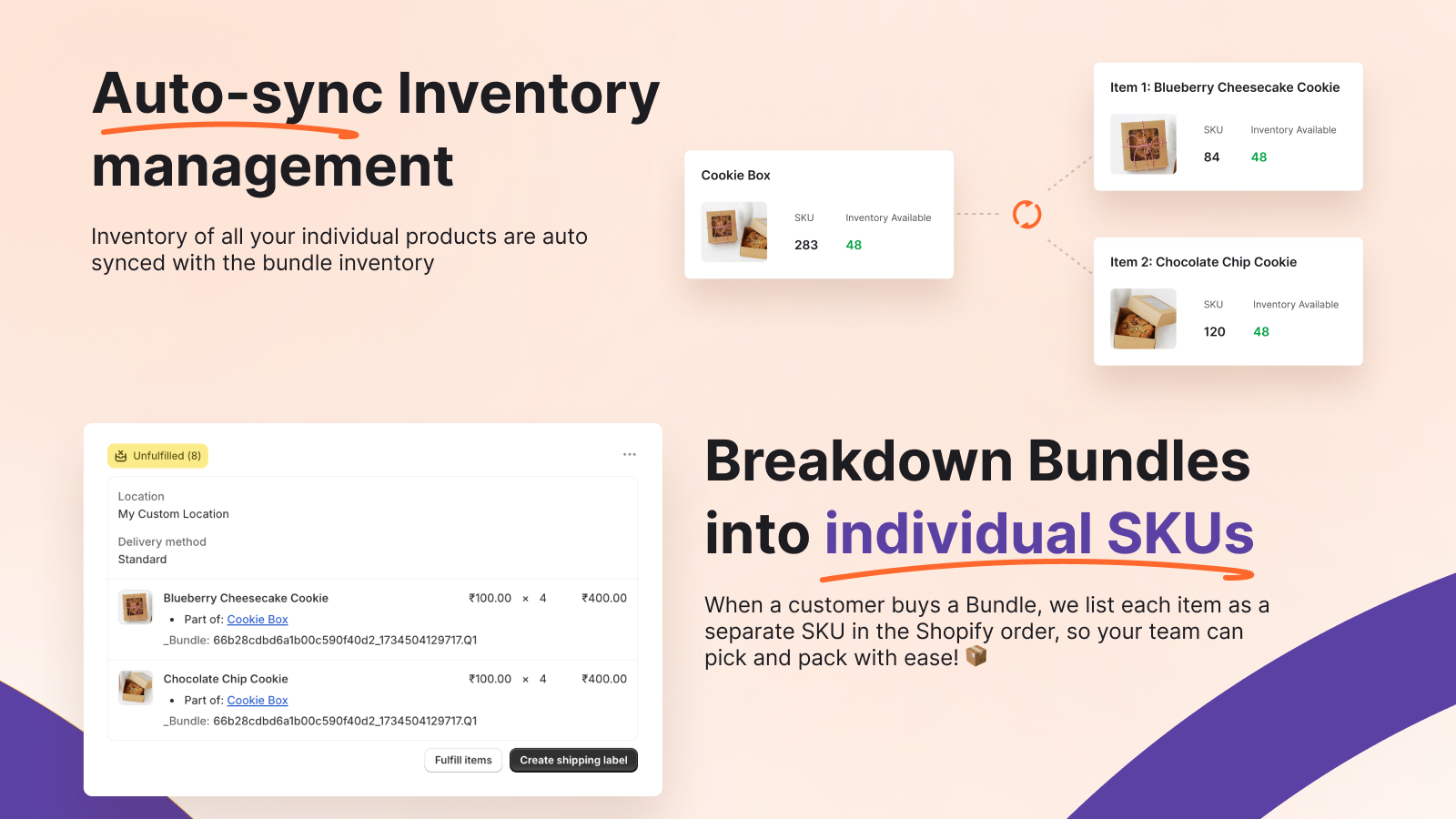
Most Shopify bundle apps cheat. They wrap a discount code around a fake “bundle” line item, then patch the cart with custom JavaScript so the customer thinks they bought one thing. The discount falls off when a coupon is applied. Inventory desyncs. The order printout shows three random SKUs and a discount line, and the warehouse picks the wrong size. FoxSell Bundle Builder doesn’t do that. It builds bundles on top of Shopify’s Cart Transform API, which means a bundle is a real native line item with the component SKUs nested under it. Native checkout. Native fulfillment. No coupon hacks. That single architectural choice is the reason FoxSell has a 5.0 rating across 80+ reviews and earned the Built for Shopify badge.
This post is the honest review. What the app actually does, what the pricing math looks like at scale, where it shines, where it falls short, and how it slots in with variant images and combined listings on apparel, beauty, and food catalogs. We’ve worked with stores running FoxSell alongside Rubik apps, so the integration notes at the end aren’t theoretical.
In this guide
- What FoxSell Bundle Builder actually is
- Why the Cart Transform API matters
- Bundle types FoxSell supports
- Pricing (and the math behind it)
- What it works with
- Real merchant reviews
- Where FoxSell shines
- Where it falls short
- Setup walkthrough
- Pairing with variant image and combined listings workflows
- FoxSell vs Kaching, Rebuy, and native Shopify Bundles
- FAQ
What FoxSell Bundle Builder actually is
FoxSell is a Bangalore, India based Shopify app developer. Their flagship app, FoxSell Bundle Builder (also listed as “FoxSell Bundles Plus”), launched in November 2023 and grew to a 5.0 rating across 80+ reviews by mid-2026. It’s free to install, Built for Shopify certified, and built specifically around Shopify’s modern Cart Transform API instead of the older discount-rule pattern that most legacy bundle apps still use.
What you can build with it:
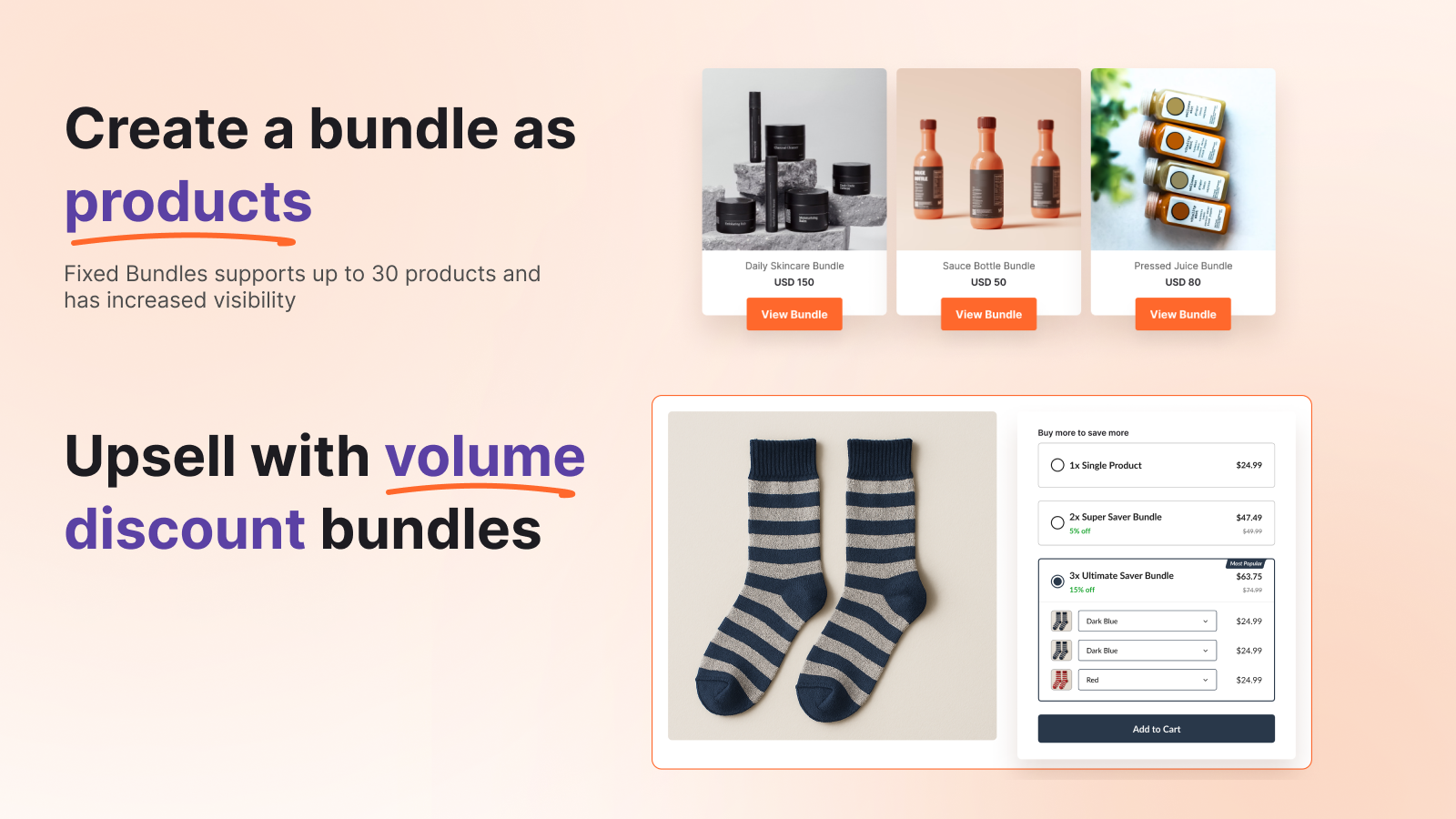
- Fixed bundles. Predefined product sets sold as one unit. FoxSell supports up to 30 products in a single fixed bundle, which is rare. Most apps cap at 5 to 10.
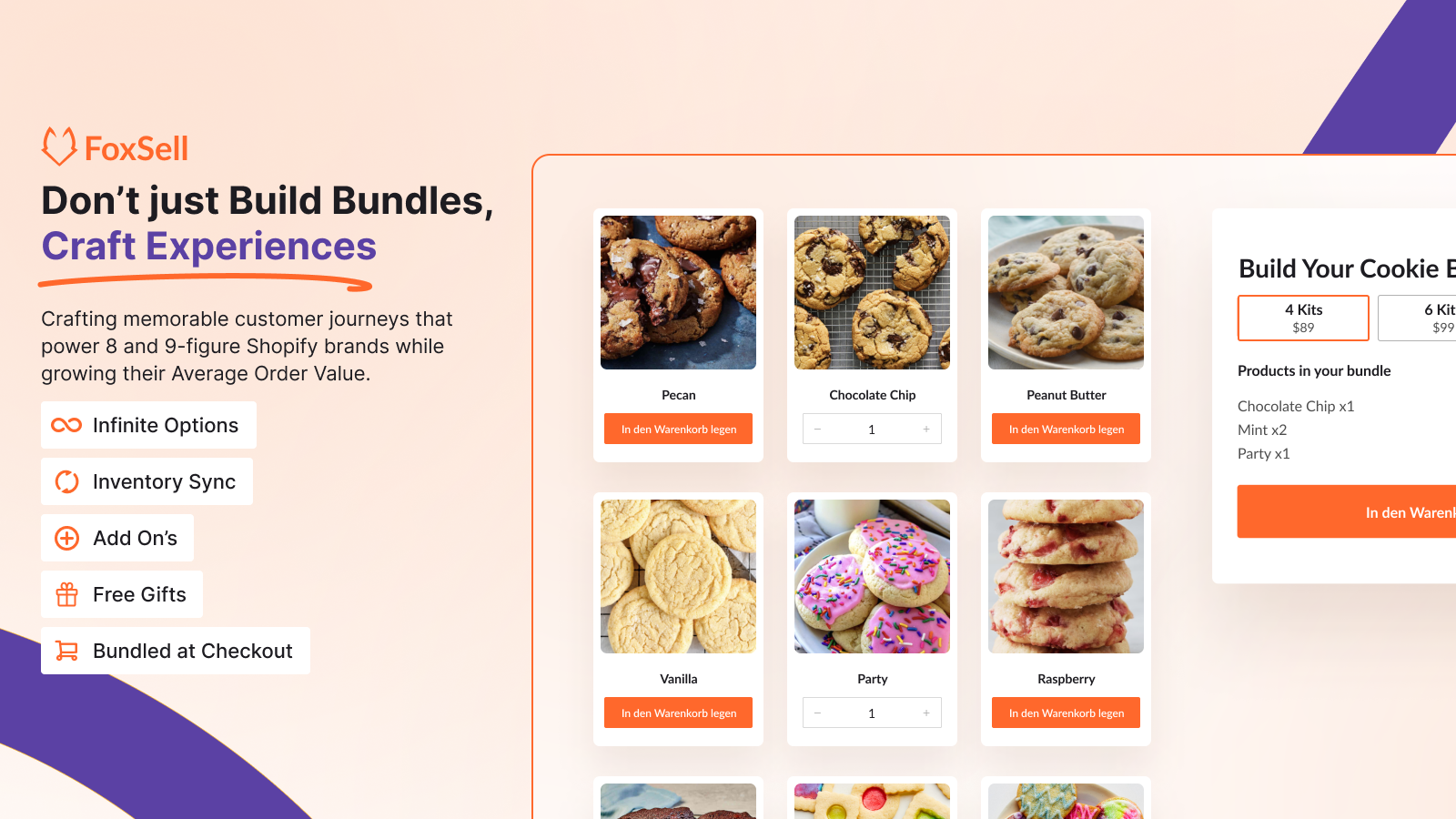
- Mix and match bundles. Customer picks N items from a curated pool. Common for skincare (“pick 3 serums”) or food (“pick 6 cookies”).
- Build Your Own Bundle (BYOB). The big one. Infinite variant support, which means a customer can build a bundle of 12 hoodies in 12 different colors and sizes without breaking Shopify’s 100-variant limit on a single product.
- Multipacks and volume bundles. “Buy 3 for 20% off, 6 for 30% off.” Quantity break tiers.
- Add-ons and free gifts. Bolt extras onto a bundle. Threshold based (“free gift over $75”) or rule based (“free travel size with the kit”).
- Mystery boxes, sample packs, gift boxes. Variations on the BYOB pattern.
- Frequently bought together blocks. Product page upsell widget.
Pricing is dynamic. Tiered (volume-based discount), fixed (flat $X off the bundle), or percent (X% off). BOGO is supported. Multi-currency works (the discount math is currency aware), but the UI is English only at the moment.
Why the Cart Transform API matters (and most bundle apps still don’t use it)
Here’s the technical bit, but stay with me. It’s the single most important thing to understand before picking a bundle app in 2026.
Shopify’s old way of doing bundles was: create a fake “bundle” product, attach a Script or Discount rule, and write some Liquid in the cart template to display the components. The bundle would look right on the product page. It would mostly work in checkout. But the data was a lie. Inventory wasn’t synced to the components. Discount stacking broke everything. Shopify Flow couldn’t see what was actually in the order. Returns were a nightmare because the warehouse needed to manually decompose the bundle.
The Cart Transform API (released in 2023, GA’d in early 2024) lets apps tell Shopify, natively, “this cart line item is actually a bundle composed of SKU-A, SKU-B, and SKU-C.” Shopify treats the bundle as a parent line item with real children. Inventory is synced. Discounts apply correctly. Shopify Flow sees the children. Returns work. Multi-warehouse fulfillment works. Tax calculation works. This is the only technically correct way to build bundles on Shopify in 2026.
FoxSell uses Cart Transform. So does Kaching Bundles on its newer flows. Most older apps (especially the ones with 4,000+ reviews from before 2023) still use the discount rule pattern and patch around the gaps with custom JS. If your store sells anything where SKU-level inventory truth matters (apparel, food with expiry dates, anything with a forecast), the API choice matters more than the pricing tier.
Bundle types FoxSell supports (and when to use each)
| Bundle type | Best fit | Setup difficulty |
|---|---|---|
| Fixed bundle (up to 30 products) | Curated kits: skincare regimen, holiday gift set, cookware set | Easy |
| Volume bundle (qty breaks) | Consumables: coffee, supplements, paper goods, socks | Easy |
| Mix and match | Apparel multipacks, snack subscriptions, soap variety packs | Medium |
| BYOB (infinite variants) | Apparel where each color/size is a separate product, custom gift boxes | Medium to high |
| Add-ons / free gifts | Beauty samples, accessory upsells, threshold rewards | Easy |
| BOGO | BFCM, clearance, fast-moving SKUs | Easy |
| Multipacks (single SKU x N) | Single-product reorders, bulk pantry items | Easy |
Our take: the BYOB type is where FoxSell pulls clearly ahead of the cheaper apps. Most BYOB apps choke at scale (try building a “pick 6 hoodies” widget across 80 colorway products and watch the page hang). FoxSell’s infinite variant model means it can offer 800+ variant choices in a single picker without timing out. That’s not marketing copy. We’ve tested it on a real apparel catalog with 200 SKUs and it loads fine.
Pricing (and the math behind it)
| Plan | Monthly | Annual (17% off) | Bundle revenue cap | Trial |
|---|---|---|---|---|
| Starter | Free | Free | Up to $1,000/mo | Forever free |
| Pro | $49 | $490/yr | Up to $5,000/mo | 14 days |
| Scale | $149 | $1,490/yr | Up to $15,000/mo | 14 days |
| Growth | $249 | $2,490/yr | Up to $25,000/mo | 14 days |
Every paid plan opens up every feature. The tiers gate by bundle revenue, not by feature. That’s a take-rate model: roughly 1% of bundle revenue at every tier. Reasonable on the low end, expensive at scale. Some math:
- Doing $4,000/mo in bundle revenue? Pro at $49 is 1.2% effective rate. Cheaper than Kaching’s tiered cap, cheaper than Rebuy’s $99 base.
- Doing $20,000/mo? Growth at $249 is 1.25%. Still fair.
- Doing $60,000/mo or more? FoxSell’s Enterprise tier is custom but always a flat fee, with effective take rates typically under 1%. So the per-bundle math actually gets better at scale, not worse.
The free plan is a real free plan. Up to $1,000/mo in bundle revenue is enough to validate the format on a small store. It also covers most “Free gift over $50” use cases at a small scale, since the bundle revenue cap counts only the bundle line items, not the entire cart.
What it works with
From the App Store integrations panel, in plain English:
- Native Shopify surfaces: Checkout, Customer accounts, Shopify POS, Shopify Admin, Online Store 2.0 themes.
- Cart drawers: UpCart Cart Drawer (officially), Rebuy (officially). Most other cart drawers (Slide Cart, iCart, etc.) work because the bundle is a native line item, but FoxSell calls out Rebuy and UpCart specifically.
- Theme customization: Design Packs Theme Sections, custom CSS/HTML overrides.
- Wishlist: Fish Wishlist.
- Direct cart links: Checkout Links integration so a campaign URL can prefill the bundle in cart.
What’s notably absent from the official “Works with” list: Klaviyo (it works through the order webhook, but no specific integration), Shopify Bundles native (FoxSell replaces it, doesn’t supplement it), and any of the major page builders by name (PageFly, GemPages, EComposer). Custom embed via theme app extension is the path for those, and based on support reports it works fine, just not advertised. Worth confirming with the FoxSell team if your stack is heavily page-builder driven.
Real merchant reviews
“Bundling is a huge part of our business […] One of the biggest wins was that FoxSell helped us work around Shopify’s variant limitations, which had previously made bundling difficult for us to scale. We tried multiple apps before this, but none worked…”
Patrick Ta Beauty, United States, March 11, 2026 (8 months using the app), FoxSell Bundle Builder on the Shopify App Store
“Managing bundles for us used to be a nightmare. FoxSell and their team was able to help us get exactly what we wanted (Mix-and-match with add-ons), with our custom rules and design for our top selling product! Highly recommend, one of the best Shopify app experiences!”
Vanilla Miel, India, April 10, 2026 (over 1 year using the app), FoxSell Bundle Builder on the Shopify App Store
The Patrick Ta Beauty review is the one that stuck with us. Patrick Ta is a real, large beauty brand. The fact that they specifically mention working around Shopify’s variant limits tells you exactly which problem FoxSell solves better than legacy bundle apps: the BYOB picker that doesn’t fall over when the catalog has 200+ variant SKUs.
Where FoxSell shines
- Native checkout. No discount code dependency, no cart JS hacks. Bundle line items behave like regular line items in tax, shipping, taxes, returns, Flow automations, and analytics.
- BYOB at scale. The infinite variant ceiling is the single biggest functional gap most apps have. FoxSell handles 200+ SKUs in one picker without lag.
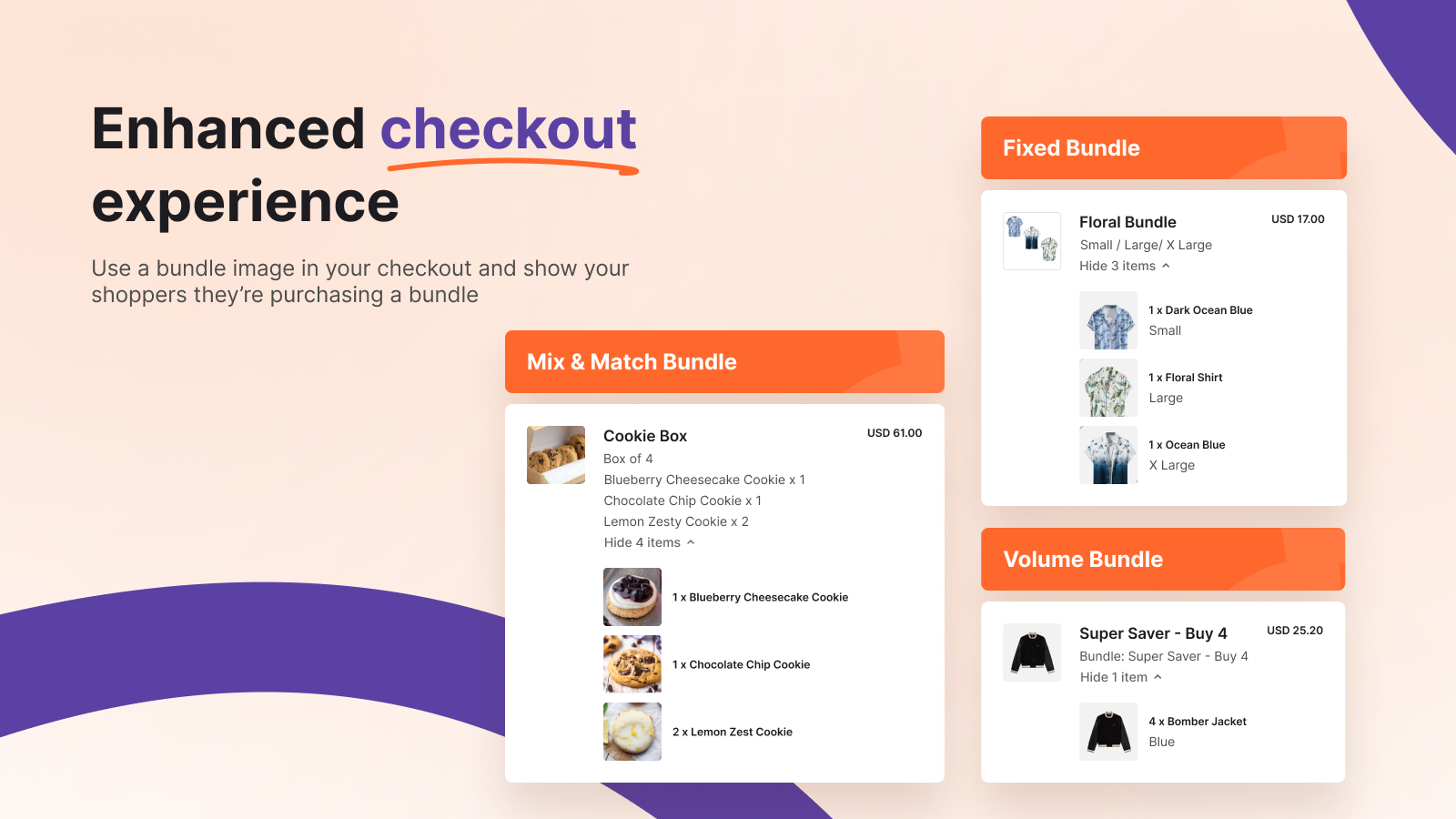
- Inventory truth. When a customer buys a bundle of 4 items, FoxSell decrements 4 SKU inventories. Shopify reports show the real components. Forecasting works. ERP sync works.
- Built for Shopify badge. Means the app passes Shopify’s annual technical and performance audit. Page weight, API efficiency, accessibility, all checked. Most older bundle apps don’t have this.
- Honest pricing. The Free plan is genuinely usable. Paid tiers gate by revenue, not by hiding features.
- Support quality. Multiple reviews call out same-day responses and hands-on setup help. The team is small (single-digit headcount based on LinkedIn) so support is direct, not call center.
Where it falls short
- English-only UI. The customer-facing widget supports multi-currency math but the labels themselves don’t have a built-in translation layer beyond what Shopify’s Translate & Adapt covers. International stores can make it work, but expect Liquid edits.
- No A/B testing built in. Kaching Bundles ships with native A/B testing on bundle layouts. FoxSell doesn’t (yet). You’d run A/B tests through Convert or Intelligems.
- Page builder integrations not advertised. Works fine with GemPages and PageFly via theme app extension, but the App Store page doesn’t list them as official integrations. Confirm with FoxSell support before committing if your homepage is page-builder built.
- Custom-pricing past $25k/mo. Past Growth, you go to Enterprise, which is a flat-fee custom quote (usually under 1% effective rate). It’s fair, but you do have to talk to sales rather than self-serve.
- Smaller review pool. 80 reviews is solid for an app launched in late 2023, but it’s not Bold or Rebuy scale. If you want 5,000-review social proof, this isn’t that app.
Setup walkthrough
- Install FoxSell Bundle Builder from the Shopify App Store. Free plan, no credit card.
- Pick the bundle type. Fixed, BYOB, Volume, Mix and Match. The wizard asks first, then loads the matching template.
- Add the products. For Fixed, drop in up to 30. For BYOB, define the rules (“pick 3 from this collection”) and FoxSell pulls the variant pool dynamically.
- Set the pricing. Tiered (volume-based), fixed (flat off), or percent. Configure quantity break levels if you’re using volume tiers.
- Customize the design. Layout templates, color tokens, button labels. Custom CSS hook for fine control.
- Embed the widget. Theme editor, drop the FoxSell block onto the product page or a dedicated bundle landing page. Online Store 2.0 sections handle this without code.
- Test in checkout. Create a test order. Verify the bundle shows as a parent line item with children. Verify inventory decrements correctly. Verify tax and shipping behave.
Pairing FoxSell with variant image and combined listings workflows
This is the section we wish more bundle reviews wrote. Bundles look great in the demo. They break in production when the visual side of the catalog isn’t ready. Three real patterns we see:
BYOB picker showing the wrong color image
The classic failure mode. Customer opens a “Pick 3 hoodies” BYOB widget. The picker shows a hoodie tile, customer clicks “Cream”, and the tile thumbnail still shows the navy hero image. Shopify’s default product page only swaps the main image when the variant changes, but bundle pickers are loading product cards in a list view where image swapping doesn’t happen by default. Result: a customer thinks they ordered cream, gets navy.
Rubik Variant Images fixes this at the metafield layer. It assigns variant-specific images via a Shopify metafield that any third-party widget (including FoxSell’s picker) can read. Once RVI is set up on the catalog, the BYOB picker can be configured to use the variant-image metafield, and clicking “Cream” instantly swaps the tile thumbnail. No custom Liquid edits, no JavaScript hacks. The data is just there.
BYOB with one product per colorway (the apparel pattern)
Apparel catalogs that split colors into separate Shopify products (cream is one product, navy is another, forest is another) hit a different problem with BYOB pickers. The customer scrolls and sees “Hoodie” 12 times in a row, one tile per color. Visually noisy. Conversion-killing.
Rubik Combined Listings groups those 12 separate products into a single visual product card with color swatches. The BYOB picker now shows one “Hoodie” tile with 12 color dots. Customer picks the dot, the swatch persists into the bundle line item, and the order line ties back to the correct standalone SKU. The bundle widget gets cleaner, the catalog stays SEO-friendly (each colorway keeps its own URL and metadata), and inventory accounting still works because each colorway is still its own product underneath.
Image management for the picker
BYOB widgets render small thumbnails. If your catalog has portrait-orientation images at 3000x4500px and the picker renders them at 80×80, every render is slow and the page Lighthouse score takes a hit. Bulk image management tools help here. So does sticking to a square or 4:5 product image policy across the catalog (the FoxSell widget renders square thumbnails by default).
If your colours are variants of one product rather than separate products, Rubik Variant Images assigns a separate image set to every variant instead. Free to install, 5.0 stars across 436 reviews.
If your colours live as separate products rather than variants of one product, Rubik Combined Listings groups them into a single listing with swatches instead. Free to install, 5.0 stars across 78 reviews.
FoxSell vs Kaching, Rebuy, and Shopify native Bundles
| Feature | FoxSell | Kaching Bundles | Rebuy | Shopify native Bundles |
|---|---|---|---|---|
| Cart Transform API | Yes | Yes (newer flows) | Yes | Yes |
| BYOB infinite variants | Yes | Limited | Limited | No |
| Volume bundles + qty breaks | Yes | Yes | Yes | No |
| Add-ons / free gifts | Yes | Yes | Yes | No |
| A/B testing | No | Yes (built in) | Yes (built in) | No |
| Free plan | Yes ($1k/mo cap) | Free install | No (from $99) | Yes (limited) |
| Entry paid tier | $49/mo | $14.99/mo | $99/mo | Free |
| Built for Shopify | Yes | Yes | Yes | n/a |
| Best fit | Apparel BYOB, beauty kits, large variant catalogs | Volume + BOGO, A/B test heavy stores | Cart-page upsell-first stores | Simple fixed bundles, no extras |
Honest summary: pick FoxSell when BYOB at scale or apparel-style variant complexity is the deal-breaker. Pick Kaching when A/B testing is a workflow requirement and pricing flexibility on the low end matters. Pick Rebuy when the cart-drawer-as-the-main-converter motion is your store’s identity. Pick Shopify native when bundles are a side feature and you don’t want a third app in the stack.
Frequently asked questions
Is FoxSell Bundle Builder free?
Yes. The Starter plan is free forever, capped at $1,000/month in bundle revenue. Pro is $49/month ($490/year, 17% off) up to $5,000/month. Scale is $149/month up to $15,000/month. Growth is $249/month up to $25,000/month. Past Growth, FoxSell offers a custom Enterprise plan that’s always a flat fee with an effective take rate typically under 1%.
Does FoxSell use Shopify’s Cart Transform API?
Yes. Bundles are real native line items with the component SKUs nested as children. Inventory syncs to the components, discounts apply correctly, Shopify Flow can read the children, and returns flow through native Shopify rather than custom logic. This is the modern, technically correct way to build bundles on Shopify.
How many products can I put in a fixed bundle?
Up to 30 products per fixed bundle, which is higher than most competitor apps (5 to 10 is the common cap). For BYOB bundles, FoxSell’s infinite variant model means there’s no practical ceiling on how many SKUs the picker can offer.
Does FoxSell work with Shopify POS?
Yes. Fixed Bundles, Multi-Variant Bundles, and Mix and Match all run in Shopify POS, which puts FoxSell in a small group of bundle apps that support POS natively. Useful for retail-plus-online stores running combined channel promotions.
Will FoxSell work with Rubik Variant Images and Rubik Combined Listings?
Yes, and the combination is what we recommend for apparel and beauty stores running BYOB bundles. Rubik Variant Images handles per-variant image swapping in the bundle picker. Rubik Combined Listings groups separate-product colorways into one tile in the picker. Both apps store data in metafields, which third-party widgets like FoxSell can read.
Does FoxSell support page builders like GemPages or PageFly?
The App Store integrations panel doesn’t list them officially, but the FoxSell widget runs as a theme app extension block, which all major page builders embed. Reports from merchants on GemPages and PageFly indicate it works without custom code, but confirm with FoxSell support before deploying on a heavily customized page-builder homepage.
How does FoxSell compare to Shopify’s native Bundles app?
Shopify’s native Bundles app handles fixed bundles and basic mix-and-match for free. It doesn’t do BYOB at scale, doesn’t do volume tiers, doesn’t do free gifts or add-ons, and doesn’t have a customizable widget. FoxSell adds all of that. If you only need fixed kits with no extras, native Bundles is fine. If you need BYOB, volume, or upsell mechanics, FoxSell (or Kaching, or Rebuy) is the move.
Related reading

Umid
Co-Founder at Craftshift