Shopify Catalog and AI channels: the 2026 guide
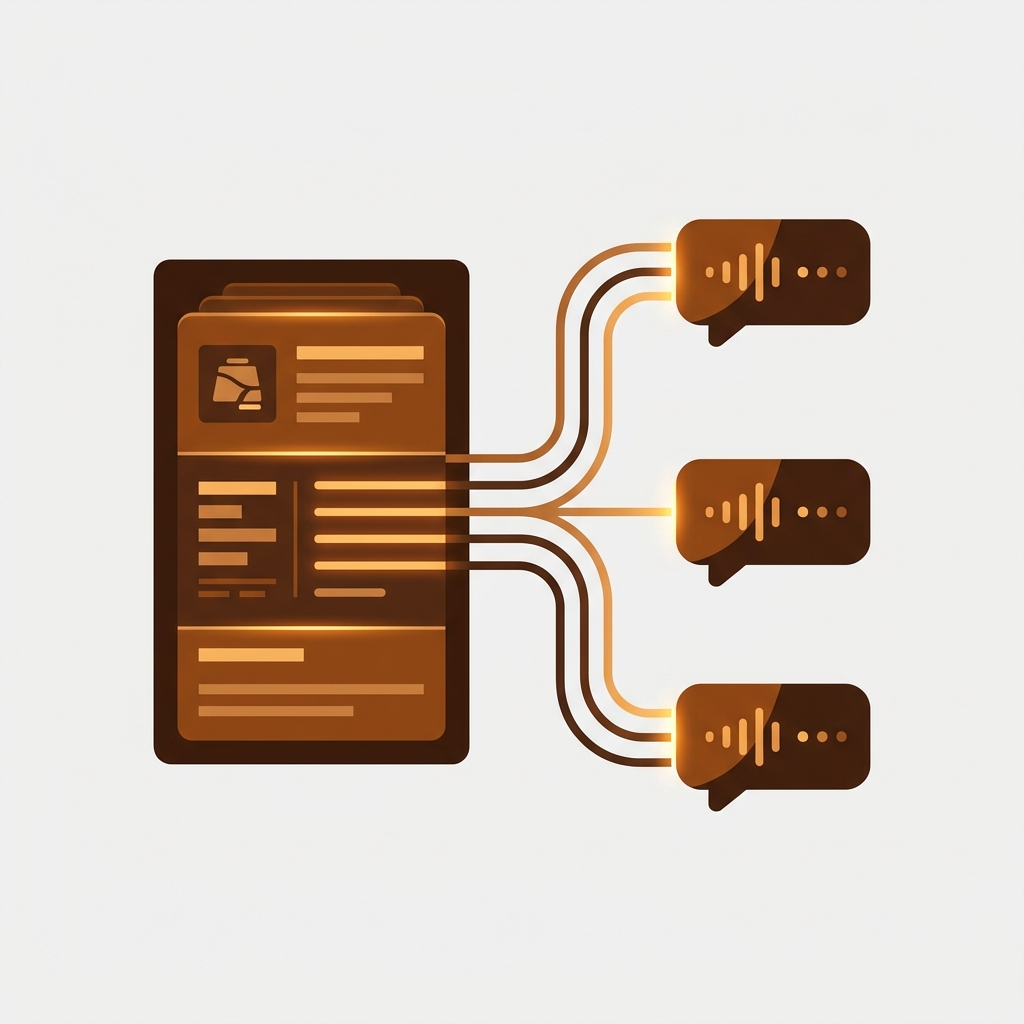
On May 12, 2026, Shopify started emailing merchants about a small but consequential change: Shopify Catalog is becoming the data pipeline that feeds your products into AI channels like ChatGPT, Microsoft Copilot, Google AI Mode, and the Gemini app. The updated Supplemental Terms for Agentic Storefronts take effect on May 25, 2026, and they apply to every merchant the moment they become eligible. If you got the email, you’re on the list. If you didn’t get it yet, your store likely isn’t eligible yet, but the rollout is moving fast.
The pitch is simple. AI assistants are already answering shopping questions. They were going to recommend products either way. The only question is whether they pull stale, scraped data from your storefront or verified, structured data from Shopify itself. Catalog is Shopify’s answer.
This guide walks through what Shopify Catalog actually does, which AI channels receive your data, what the May 25 terms change, the controls you have inside the Admin, and what to clean up in your product structure now so the AI rendering of your catalog does not embarrass you later. We pulled facts from Shopify’s news posts, the Supplemental Terms page, and the Agentic Storefronts help docs.
In this post
- What changed on May 12, 2026
- What Shopify Catalog actually is
- The AI channels Catalog feeds
- What the May 25 terms change
- Eligibility, in plain English
- The controls you actually get
- Products and features that get left out
- Why product structure matters more than ever
- Our take, and where we disagree with the hype
- Pre-eligibility checklist
- FAQ
- Related reading
What changed on May 12, 2026
Shopify sent eligible merchants an email titled “How Shopify Catalog and AI channels will work for your store.” The note announced an update to the Supplemental Terms for Agentic Storefronts, effective May 25, 2026. The terms govern how product data flows from your store to Shopify’s AI partners. They are an add-on to your Shopify Terms of Service, not a replacement.
Three things are happening at once, and the email blurs them. Worth separating cleanly:
- Shopify Catalog is the data infrastructure layer that structures and enriches your products for AI consumption. It already exists. The May 12 note is about expanding what it does.
- Agentic Storefronts is the merchant-facing surface that lets shoppers discover and buy your products inside AI conversations. It launched at scale on March 24, 2026.
- The May 25 terms update applies to merchants once they are flagged eligible. Until then, Catalog does not share your data with new AI channels. Once you flip to eligible, the new terms govern that sharing automatically.
You can already see the controls inside the Shopify Admin under the Agentic section, even before your store is eligible. That is the part most people miss.
What Shopify Catalog actually is
Catalog is a structured data layer. Think of it as the bridge between the messy, unstandardized way merchants list products and the clean, taxonomy-driven way AI agents want to read them. Shopify’s specialized language models read your product page (title, description, variants, images, metafields, tags, options) and produce a normalized record that any AI agent can consume.
The mechanics, as Shopify describes them:
- Standardize every product into a universal taxonomy (so a “raglan tee” is correctly categorized as Apparel > Tops > T-Shirts, not “miscellaneous”)
- Infer attributes Shopify can read but you did not fill in (material, fit, season, intended audience)
- Consolidate variants and cluster identical items so the same shirt is not shown twice in a chat
- Sync price and inventory in real time, so the AI never quotes a sold-out item
- Distribute the record to partner AI channels, with channel attribution flowing back to you
The selling point is the alternative. When AI platforms scrape product data themselves, they get HTML soup. They get the wrong currency, last week’s sold-out variant, the SEO description from 2019. Catalog replaces scraping with a verified feed from the source of truth. You can validate this is a real problem by reading any unhappy review of AI shopping assistants from 2024 to 2025. Half of them say “the AI recommended a product that has been out of stock for months.”
What it doesn’t do: Catalog isn’t a marketing channel. It isn’t a place you go to write copy. It isn’t a feature you turn on. It’s the plumbing underneath Agentic Storefronts, the Shop app, and any future AI surface Shopify ships. You feed it by keeping your product data clean. Run our free Shopify SEO checker and the product page grader on your bestsellers to see how Catalog will likely read them.
The AI channels Catalog feeds
As of mid-May 2026, four AI channels receive product data through Shopify Catalog. Two of them complete purchases inside the chat. Two of them treat themselves as a discovery surface and bounce shoppers back to your storefront.
| AI channel | Checkout model | Availability |
|---|---|---|
| ChatGPT | Discovery referral. Customer completes on your storefront. | Live for eligible US-facing stores since March 24, 2026. |
| Microsoft Copilot | Direct checkout in the chat (Shopify-powered). | Live for eligible US-customer-facing stores. |
| Google AI Mode in Search | Direct checkout. Customer never leaves Google. | Early access. US-based stores selling to US customers. |
| Gemini app | Direct checkout. Embedded inside Gemini. | Early access. Same US restrictions. |
| Perplexity | Discovery referral. | Mentioned in Winter ’26 launch; integration details still vague. |
| Shop app | Native Shopify experience. | Live everywhere Shop is. |
The Universal Commerce Protocol (UCP) that Shopify co-developed with Google sits underneath all of this. Future agents that adopt UCP can plug into the same Catalog feed without a custom integration. That is the part to watch over the next twelve months. New partners will appear. The terms update on May 25 was written with that expansion in mind.
What the May 25 terms change
The Supplemental Terms for Agentic Storefronts (last updated March 10, 2026) become effective for eligible merchants on May 25, 2026. They are short, so read them. The clauses worth highlighting:
- You remain the merchant of record. Refunds, customer service, taxes, returns all sit with you. Shopify is the data conduit, not the retailer.
- Eligibility is at Shopify’s sole discretion. No appeal. No formal application. You either get the email or you do not.
- Customer and order data is shared with the partner channel for the limited purposes of completing the order, fraud prevention, and post-purchase status updates. Not for arbitrary AI training.
- Partner-specific terms apply on top of these. Microsoft, Google, and OpenAI each have their own merchant terms. You agree to both layers when you stay opted in.
- Shopify can add new Participating Partners over time. Your default is opt-in unless you toggle off in the Admin.
- Transaction fees are zero beyond your normal payment processing. Shopify is not taking a per-order cut from AI checkouts right now.
The “zero transaction fee” line is unusual for Shopify. Read it as a market-share play. Once AI channels are entrenched, that line is exactly the sort of clause that quietly changes in a future revision. Not a prediction. A pattern.
Eligibility, in plain English
Shopify has not published a formal eligibility matrix. From the help docs and the way the rollout has moved, the rough rules look like this:
- For ChatGPT discovery referrals: nearly all eligible Shopify stores were activated by default on March 24, 2026.
- For Copilot direct checkout: US customer base, guest checkout enabled, store policies filled in, agreement to the Supplemental Terms.
- For Google AI Mode and Gemini direct checkout: US-based store, US customers, in early access. Most non-US merchants are not yet eligible regardless of how clean their catalog is.
If you are running a Shopify Plus store on the new Agentic plan, the eligibility flow looks different. Talk to your launch engineer. If you are on Basic, Grow, or Advanced, the email is your signal. Once it arrives, the Agentic section in your Admin opens up in full. Until then it shows a placeholder.
The controls you actually get
Inside the Admin under Settings > Agentic (or the Agentic section in the sidebar, depending on your account), you can toggle two things per partner channel:
- Shopify Catalog access. Whether the channel can receive your product data at all. Turn this off and the channel stops getting your catalog.
- Direct checkout. Whether the channel can complete the transaction inside its own chat. Turn this off and the channel still discovers your products, but every shopper is sent to your storefront to pay.
That is the entire control surface. Two switches per channel. Worth being honest about what is not on the menu:
- No global “turn off Agentic Storefronts” button.
- No fine-grained product-level opt-out (you hide individual products by tag or by collection exclusion, then mark them unavailable to the Catalog).
- No control over how the AI summarizes your product. Your brand voice gets compressed into a few lines and a price.
- No control over which competitor shows up next to you in the chat.
The Knowledge Base App that Shopify announced at Winter ’26 is the one place where you can shape the answer surface. It lets you publish FAQs, return policies, sizing logic, and tone notes that AI agents read alongside your product data. We covered this in our Shopify AEO guide. If you have not set it up, that is the priority before May 25.
Products and features that get left out
Not every product Shopify sells will land in an AI chat. Direct checkout has clear carve-outs. Discovery is broader, but still has gaps.
| Unsupported in direct checkout | Why it matters |
|---|---|
| Subscriptions | Recurring billing logic does not transfer to the partner checkout. |
| Bundles and customizable products | The agent cannot resolve a multi-input configurator. |
| Digital products | Fulfillment flow is not standardized in UCP yet. |
| B2B-only products | Customer-account gating breaks the guest-checkout assumption. |
| Local delivery and in-store pickup | Address-aware fulfillment is not part of the partner checkout. |
There are tracking limits too. Custom pixels do not fire in partner checkout. Google Analytics events fire server-side but not client-side. Required account sign-in is incompatible with the guest-checkout model. If your analytics stack assumes a browser session for every order, AI orders will look like ghosts in the funnel until you wire up the server-side events.
Why product structure matters more than ever
Here is the part most blog posts about Agentic Storefronts skip. The way you structure your catalog directly controls how the AI presents you. Bad structure produces bad AI answers, full stop.
Three common failure modes we see in stores that asked us to audit them:
- Color in the variant name, color image in the gallery, but no per-variant image. Catalog reads the variant, picks the first gallery image (often the wrong color), and the AI shows a black shoe when the shopper asked for olive.
- One product with 90 variants instead of 9 products with 10 variants each. Catalog clusters and consolidates. The AI sees one entry and one image. The other 89 variants are invisible in the chat.
- Tags and metafields full of internal abbreviations. Catalog cannot map “SS26-PB-NV-M” to “Spring/Summer 2026, Pintuck Blouse, Navy, Medium”. A clean material metafield does that work for you.
The fixes aren’t exotic. Get the right image on the right variant. Split overgrown products into discoverable separate listings. Fill in the option names and option values cleanly. These are the same fixes that already win you a click on Google Shopping and a tap on a collection page. Now they also decide whether ChatGPT shows you to a shopper.
For the variant image problem on the product page, this is where Rubik Variant Images earns its keep. We built it so each variant binds to its own set of media, gallery filtering and swatch styles included, with the data sitting in metafields that any downstream consumer (including Catalog) reads cleanly. Read the Shopify variant images FAQ for the setup.
For the “one product with 90 variants” trap, the right move is usually Rubik Combined Listings. It lets each color (or material, or size cohort) live as its own product with its own URL, its own title, and its own images, while still showing up as a single swatch-driven group on the collection page. AI agents reading Catalog see distinct, discoverable records instead of one giant blob. Our take on this is documented in Combined Listings explained.
Before you restructure anything, run the catalog through our free Variant Combination Calculator to see whether you are already brushing up against the 2,048 variant limit. If you are, Combined Listings is not optional. It is the only practical fix that does not require Shopify Plus.
Our take, and where we disagree with the hype
Most posts about Agentic Storefronts read like Shopify wrote them. Reality is more mixed.
What’s real: AI shoppers are already buying. The numbers Shopify quotes (thousands selling through Copilot, hundreds of millions of ChatGPT users) are not vanity stats. Stores that opted in early are seeing measurable referral traffic. Holding out for ideological reasons is going to cost revenue.
What’s overhyped: the claim that AI channels will replace your storefront. They won’t. The AI surface flattens you into a price, a thumbnail, and a one-line summary. The kind of detail that converts a considered purchase (your photography, your story, your size guide, your reviews wall) does not survive that compression. So the AI channel is great for picking up shoppers at the discovery edge, but the actual brand experience still lives on your storefront.
What annoys us: the default-opt-in mechanic. We get why Shopify did it. A platform-wide opt-out box would have killed the rollout. But “we will sign you up automatically as soon as you become eligible” is not the same as “you chose to participate.” The May 12 email is, in practice, a heads-up before that switch flips for most non-US merchants over the next few months. Why is the default not “we will email you when you can opt in” instead? Because that would mean half the catalog is missing from day one, and that hurts the AI partners more than it hurts Shopify.
Net call: opt in, but with clean structure and an actual Knowledge Base entry. The cost of opting out is invisible (you simply do not show up in chats you would have shown up in). The cost of opting in with messy data is visible and ugly. Fix the data, then flip the switch.
If your colours live as separate products rather than variants of one product, Rubik Combined Listings groups them into a single listing with swatches instead. Free to install, 5.0 stars across 78 reviews.
Pre-eligibility checklist
Do these now, even before your store gets the email. They cost nothing and they protect you when the switch flips:
- Fill in all your store policies: refund, shipping, privacy, terms of service. Eligibility checks read these.
- Enable guest checkout. Required-account flows break partner checkout.
- Audit your variant-to-image binding. The wrong photo on the wrong color is the most embarrassing AI rendering you can have.
- Set a clean primary category and let Shopify’s product taxonomy auto-tag the rest.
- Fill in material, color, size, and audience metafields on at least your top 100 products.
- Generate a Knowledge Base entry covering returns, sizing, and brand voice. Bonus points for a FAQ section per category.
- Validate your structured data with our JSON-LD Schema Generator and our AI Readiness Checker.
- Re-check the Agentic section of your Admin weekly. The toggles turn on the moment your account becomes eligible.
FAQ
Is Shopify Catalog the same as Agentic Storefronts?
No. Catalog is the data layer. Agentic Storefronts is the surface where your products appear inside AI conversations. Catalog is what feeds the surface. You will not interact with Catalog directly; you will use the Agentic section of your Admin to control which channels receive its output.
When do the new Supplemental Terms take effect?
May 25, 2026. They apply automatically to any merchant who is eligible for Agentic Storefronts at that point, and to every new merchant who becomes eligible after. If your store is not yet eligible, the terms do not bind you until you are flagged in.
Can I fully opt out of Agentic Storefronts?
Not in one click. You can deactivate Shopify Catalog access for each partner individually, which prevents that channel from receiving your data, and you can disable direct checkout per channel to push every shopper back to your storefront. There is no platform-wide kill switch, and ChatGPT discovery in particular has limited admin controls.
Does Shopify charge a fee on AI channel orders?
No. The current terms state there are no fees beyond standard payment processing for direct checkouts inside Agentic Storefronts. Treat that as the current price. Shopify can revise the Supplemental Terms; expect this clause to be the one most likely to change in a future update.
Are non-US stores eligible for Agentic Storefronts?
Discovery referrals (ChatGPT) have been rolling out globally for eligible stores. Direct checkout on Google AI Mode and Gemini is currently restricted to US-based stores selling to US customers. Microsoft Copilot direct checkout has slightly looser rules but still favors US customer bases. Expect the geography to expand over the next 6 to 12 months.
Will the AI summarize my product correctly?
Only if your product data is clean. AI agents read the Catalog record, not your hero copy. If your title is keyword-stuffed, your description is a wall of unformatted text, and your variants are inconsistent, the AI summary will reflect that. Fix the inputs and the output improves automatically.
Are subscriptions and bundles supported?
Not in direct checkout, as of May 2026. Subscriptions, bundles, customizable products, digital goods, and B2B-only products are excluded from partner checkout flows. They may still appear as discovery referrals but the shopper has to land on your storefront to convert.
Related reading
- Shopify stores are now shoppable inside ChatGPT: what merchants need to know
- Shopify shipped native llms.txt, agents.md, and an agentic discovery sitemap to every store
- The Shopify AEO guide: how to win in ChatGPT, Perplexity, and Google AI
- Why you should not block AI bots in your Shopify robots.txt
- Shopify variant images FAQ (rubikvariantimages.com)
- Shopify Combined Listings explained (rubikify.com)

Umid
Co-Founder at Craftshift