Combined Listings for Shopify rug and carpet stores: size, color, and material done right
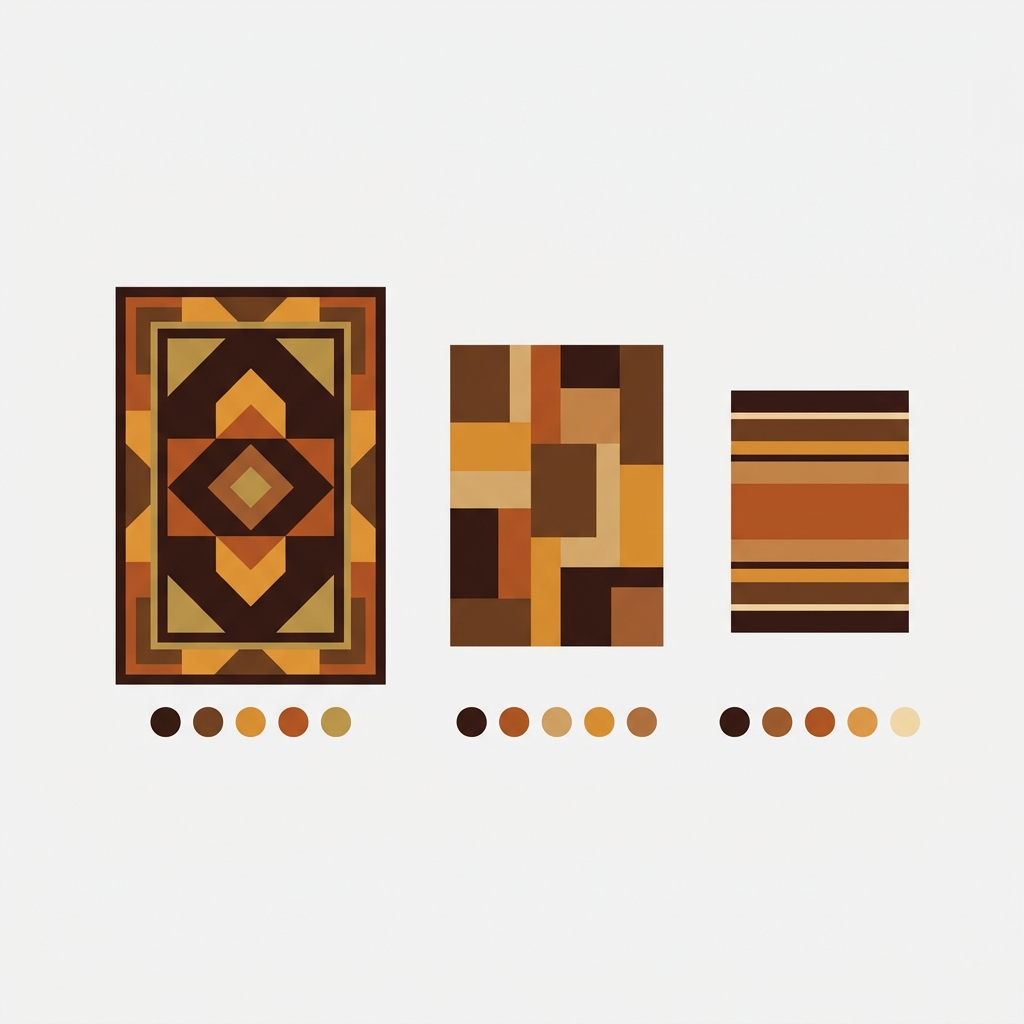
A single rug design in 5 sizes (3×5, 5×8, 8×10, 9×12, runner) is already 5 different SKUs at 5 different prices. Add 4 colorways and you are at 20 SKUs. Add 2 pile materials (wool, viscose) and it climbs to 40 SKUs for one design. The math gets ugly fast on a rug catalog, and the Shopify combined listings setup is what keeps the storefront clean while letting each size and color combination earn its own SEO traffic.
Rugs are an interesting category because the size dimension carries unusual weight. Unlike sofas or pendants, where size mostly affects shipping and price, rug size changes the SEO query entirely. “8×10 navy abstract rug” and “5×8 navy abstract rug” are different searches with different intent. The customer knows the room they are buying for, and they search dimensions first.
This post covers how rug and carpet brands structure their Shopify catalog with combined listings. We have onboarded enough rug sellers (vintage, machine-loomed, hand-knotted, area, runners) onto our Rubik apps to know the patterns. The architecture works the same whether you sell 50 vintage rugs as one-off products or 5000 SKUs of a machine-loomed catalog.
In this guide
- Rug variant math: why every size is its own SKU
- Why each size should be its own product
- How combined listings fix the rug catalog
- Handling colorways and pile materials
- One-of-a-kind rugs (vintage, hand-knotted)
- Pairing with variant image filtering
- Bulk setup for existing rug catalogs
- Pricing for rug catalog sizes
- FAQ
- Related reading
Rug variant math: why every size is its own SKU
Rug pricing scales with size in a way that other categories don’t. A 3×5 rug at $89 and a 9×12 version of the same design at $599 are 7x apart in price. The 3×5 weighs 8 lbs, ships in a tube. The 9×12 weighs 60 lbs, ships oversized. Different freight class, different return policy, different production lead time.
So even from a pure operations standpoint, treating size as a “variant” of one master rug product hides too much. Inventory tracking, shipping rules, vendor purchase orders, and pricing tiers all live more cleanly when each size is its own product with its own SKU lineage.
Add color and material into the mix and the picture gets denser:
- Sizes: 5 to 8 typical (2×3, 3×5, 4×6, 5×8, 6×9, 8×10, 9×12, runner 2×8)
- Colors: 3 to 8 typical (depends on collection breadth)
- Pile material: 1 to 3 (wool, jute, synthetic, viscose, silk blend, polypropylene)
- Pile height: occasionally a variant axis (low, high, shag)
That’s easily 60+ SKUs per rug design. Across a 100-design catalog, you are sitting on 6000 SKUs total. The Shopify variant cap on standard plans is 100 per product, so the all-variants-in-one-product approach doesn’t survive contact with a real rug catalog.
Why each size should be its own product
The SEO case for size-specific product pages on rugs is unusually strong. Here are real high-volume search queries for rugs:
- “8×10 area rug”
- “5×7 navy rug”
- “runner rug 2×8”
- “9×12 wool rug”
- “6×9 abstract rug”
Each is a real search query with explicit size intent. The customer has measured their room. They know the dimensions. They are not going to read a master rug page and figure out which dropdown option matches “8×10.”
If 8×10 is a separate product, you can title it “Linnea Abstract Rug, 8×10, Navy Wool” and write meta description copy targeting “8×10 navy rug.” Google indexes it as a distinct page. When someone searches “8×10 navy rug,” your size-specific page surfaces. That single change has lifted long-tail rug search traffic meaningfully on every catalog where we’ve helped implement it.
How combined listings fix the rug catalog
Splitting into separate products per size and color creates the same collection page mess we covered for furniture and lighting. Now the “Wool Rugs” collection has 20+ versions of the same Linnea design stacked together. Combined listings groups them visually so the collection card shows one Linnea design with size pickers and color swatches on the card.

We built Rubik Combined Listings to handle this. The collection card can show color swatches as the primary selector (since color is the visual decision) and size as a secondary picker (since size is the price determinant). Click a color swatch, the card switches color. Click a size, you land on the size-specific product page with size-specific photos and pricing.
“After using this app, I can confidently say it’s one of the smartest additions we’ve made to our store. What I love most is how deeply customizable it is, you can build virtually any kind of option set. The customer-facing side looks polished and loads fast. The real game-changer, though, has been the support, particularly from Farid. Farid jumped in, listened carefully to what we were trying to achieve with our very specific product setup, and then went ahead and personally tweaked multiple parts of the app for us.”
yezey, Poland, 2026-03-18, Rubik Combined Listings on the Shopify App Store
Handling colorways and pile materials
Color and pile material are the secondary axes. Two ways to architect them:
| Catalog type | Recommended split | Why |
|---|---|---|
| Single material (e.g., all wool) | Split by size + color | Material isn’t a variant axis; doesn’t carry SEO weight |
| Multi-material (wool + jute + synthetic) | Split by size + color + material | “Wool 8×10 rug” is a real search; material splits earn it |
| One-of-a-kind (vintage) | Each rug is its own product | No combined listings needed; each rug is unique |
For multi-material catalogs, the combined listings group typically contains size+color+material products. The collection card shows color swatches (the visual decision); on the product page, size and material are pickers that route to the right specific product.

One-of-a-kind rugs (vintage, hand-knotted)
Vintage and hand-knotted rugs are unique. Each rug is its own product. There is no “size variant” because the size is literally fixed (this exact rug is 7’4″ by 9’2″). So combined listings is less relevant here.
But there is still a use case: grouping by collection or origin. “Antique Persian Heriz” rugs across various sizes and colors can group as a stylistic family. The shopper browsing the Heriz collection sees swatches representing the available pieces (color or pattern variation), clicks one, lands on that specific rug. This is more of a curation play than an SEO play, but it works for boutique vintage rug stores where browsing is the experience.
Pairing with variant image filtering
Rugs photograph differently in each color. The 5×8 navy version has its own room scene, its own close-up of pile texture, its own detail of the fringe. When a shopper lands on the 5×8 navy product page and toggles a native variant (say, pile height: low or shag), the gallery should filter accordingly. That is variant image filtering, handled by Rubik Variant Images.
Combined Listings handles cross-product navigation between rug colorways. Variant Images handles per-product gallery filtering for pile or texture variants inside each rug. Together, the customer experience is: collection card shows navy + camel + grey swatches → click navy → land on 5×8 navy product page → see navy photos → pick “high pile” → gallery updates to 5×8 navy + high pile photos.

Bulk setup for existing rug catalogs
Most rug stores arrive with each size and color already as separate products. Bulk grouping handles this:
- Title pattern. “Linnea Abstract Rug, 8×10, Navy” auto-detects shared prefix (“Linnea Abstract Rug”) and groups everything matching.
- Product tags. Tag products with
RUBIK::linnea-abstract::color::navy::#1F3A5Ffor structured grouping. - Metafield grouping. Use a
parent_design_idmetafield to group by design family.
For rug catalogs with consistent naming, title pattern handles 90%+ of the grouping in one pass. AI Magic Fill auto-extracts color values and detects swatch hex codes from product images. The bulk grouping deep dive covers each method with examples.
If your colours are variants of one product rather than separate products, Rubik Variant Images assigns a separate image set to every variant instead. Free to install, 5.0 stars across 436 reviews.
Pricing for rug catalog sizes
| Plan | Price | Product groups | Rug catalog fit |
|---|---|---|---|
| Free | $0 | 5 | Trying it out, single rug design |
| Starter | $10/mo | 100 | Boutique rug brand, 50 to 100 designs |
| Advanced | $30/mo | 500 | Mid-market rug catalog, 100 to 500 designs |
| Premium | $50/mo | 5,000 | Large rug retailer, multi-collection |
Annual billing saves 17%. Each design (with all its size and color products) counts as one group on your plan.
See the live demo store, watch the AI features tutorial, or read the getting started guide.
FAQ
Should each rug size be its own product, or a variant?
Separate products. Size carries strong SEO weight on rug queries (“8×10 area rug”), and pricing scales dramatically with size, so each size needs its own SKU and product page. Combined Listings groups the size products visually on the storefront.
How do I handle pile material differences?
If you sell only one material, treat it as part of the product description. If you sell multiple materials (wool, jute, synthetic), split by material because “wool rug” is a real search query. The combined listings group can include all material+size+color products together.
Will combined listings slow down my rug site?
No measurable hit. Rubik Combined Listings is metafield-based with no external API calls. Group data ships with the page, so collection cards render with swatches in the same paint cycle as the rest of the storefront.
Does it work for one-of-a-kind vintage rugs?
Less directly. Vintage rugs are unique products, so there’s no “variant axis” to group. Combined listings can still group by collection or origin (all “Antique Heriz” rugs), but the value is curation, not SEO.
Can I bulk-create groups for an existing rug catalog?
Yes. Bulk grouping uses title pattern (auto-detects shared prefixes), product tags (parses a structured tag format), or metafield grouping (groups by shared metafield value). Title pattern handles most rug catalogs that already use a “Design Name, Size, Color” naming convention.
Does it require Shopify Plus?
No. Rubik Combined Listings runs on every Shopify plan, including Basic and Grow.
Related reading

Umid
Co-Founder at Craftshift