Best Shopify apps for home decor stores in 2026, ordered by review count
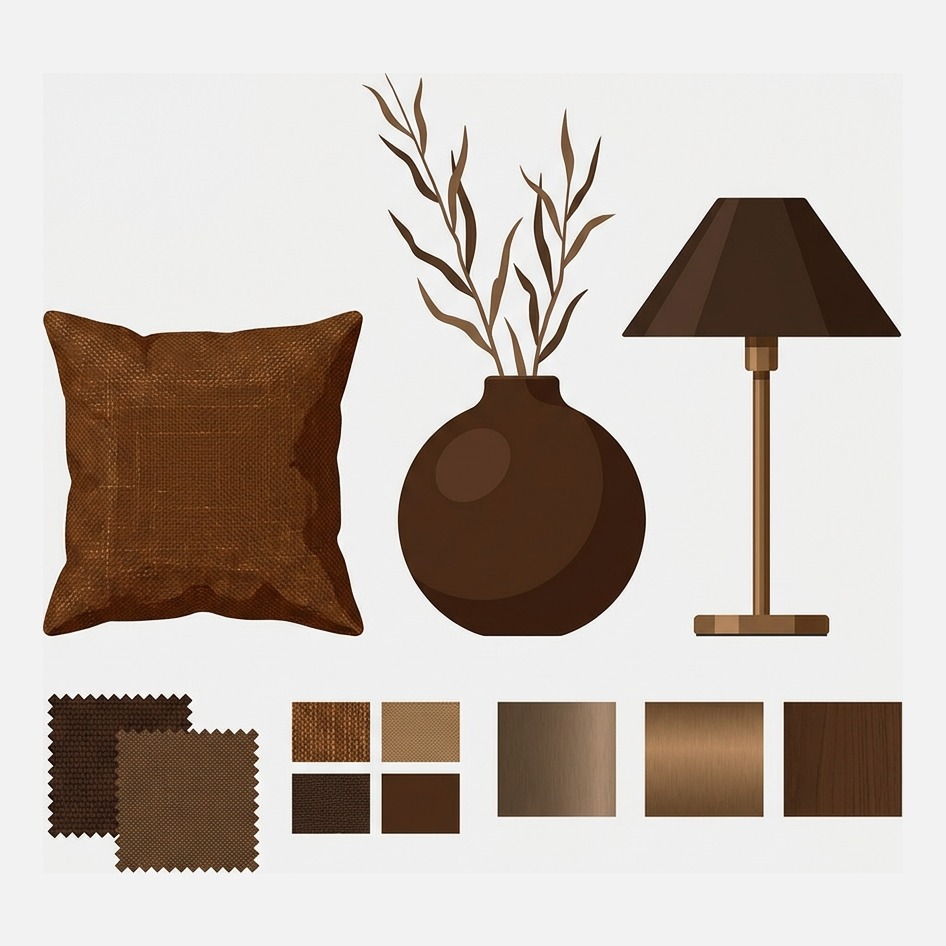
Short answer: homeware sells on photography, so the apps that matter are the ones that put more of it in front of a shopper. Judge.me carries customer photos at 5.0 stars across 42,501 reviews, and Rubik Variant Images, built by Craftshift, assigns a separate image set to every finish so the gallery filters. Free to install, 5.0 stars across 436 reviews.
Home decor is an awkward catalogue to run. The products are simple to describe and brutal to photograph: a stoneware vase in six glazes, a lamp in brass and matte black and walnut, a rug in four sizes and three weaves. Each finish needs its own photograph, in a room. So a decor store carries several times the image count of a comparable apparel store, and a product page that has to show the right five of forty photos at the right moment.
Then the second problem, which nobody warns you about. Nobody returns a mug because it did not fit. They return it because the glaze read cream on screen and arrived beige. Which is why photo reviews do more work in this category than almost any other, and why half this list is about getting more images onto the page rather than fewer.
Disclosure: we build Shopify apps ourselves. Craftshift makes Rubik Variant Images and Rubik Combined Listings, two of the apps below. They appear at the position the App Store’s own review count puts them, flagged as ours every time, and we say plainly where a competitor is the better pick. Two apps below beat us on track record by a factor of a hundred, and we say so in their sections.
In this guide
- How this list is ordered
- What actually breaks on a homeware product page
- The comparison table
- Judge.me Product Reviews
- Loox Product Reviews
- Kaching Bundles
- Instafeed
- Rubik Variant Images (ours)
- CBB Shipping Rates Calculator
- Lookfy Lookbook
- Rubik Combined Listings (ours)
- How to choose
- FAQ
How this list is ordered
By Shopify App Store review count, highest first. Not by our opinion of which app is best, because a ranking authored by a company that sells into the same category is worth very little. Review count is public and checkable in ten seconds. Every rating, count and price below was pulled from the live listing in July 2026. They drift. Check before you install.
What this ordering cannot tell you is fit. An app with 42,501 reviews and an app with 63 solve completely different problems, and the small one can still be the only thing that solves yours. The “how to choose” section gives you a decision rule instead of a leaderboard.
What actually breaks on a homeware product page
Shopify lets you attach exactly one featured image to a variant. One. So a shopper who taps the Sage glaze gets a single sage photo, and then scrolls straight past the ochre, the cobalt and the speckled cream on their way to the size chart. Every photograph you paid a stylist to shoot is still sitting in that gallery, in the wrong order, for the wrong person.
It is the most expensive quiet failure in decor merchandising, and it is invisible in analytics. Nobody bounces with a note saying “I could not tell which photos were the sage ones.” They just leave. The mechanics of the one-image-per-variant limit are in our complete guide to Shopify variant images.
Doing this by hand is fine for a twelve-product shop. At three hundred SKUs with six glazes each, that is 1,800 image assignments you redo every time a new colourway lands, which is why an app that assigns a whole image set per finish and filters the gallery on click exists at all. Free to install, 5.0 stars across 436 reviews, and yes, that one is ours. If you want to see how bad the arithmetic gets for your own catalogue, our free variant calculator will tell you.
The best Shopify apps for home decor stores compared
Ratings, review counts and cheapest paid tier verified on the Shopify App Store, July 2026. BFS means the listing carries the Built for Shopify badge.
| App | What it does for decor | Rating (reviews) | Free plan | Cheapest paid | BFS |
|---|---|---|---|---|---|
| Judge.me Product Reviews | Photo reviews at scale | 5.0 (42,501) | Yes | $15/mo | Yes |
| Loox Product Reviews | Photo and video review galleries | 4.9 (8,800) | Yes | $49.99/mo | Yes |
| Kaching Bundles | Gift sets and room bundles | 5.0 (4,964) | Dev stores only | $14.99/mo | Yes |
| Instafeed | Shoppable Instagram on the storefront | 4.9 (1,918) | Yes | $8/mo | Yes |
| Rubik Variant Images (ours) | An image set and swatch per finish | 5.0 (410) | Yes | $25/mo | Yes |
| CBB Shipping Rates Calculator | In-cart rates for bulky items | 4.6 (208) | No | $4.99/mo | Yes |
| Lookfy Lookbook | Shoppable room and lookbook galleries | 4.8 (204) | Yes | $5.99/mo | Yes |
| Rubik Combined Listings (ours) | Groups separate finish products into one listing | 5.0 (63) | Yes | $10/mo | Yes |
Judge.me Product Reviews: 5.0 stars, 42,501 reviews
The biggest review install base on the App Store by a distance, and for a decor catalogue the reason is photos. Customer photographs of a vase on a real windowsill answer the colour question that your studio shot cannot, because a studio shot is always suspiciously perfect. Judge.me’s free tier collects unlimited reviews with photos, which is unusual, and the paid Awesome plan is $15/month.
Where it stops: it is a review app and only a review app. It will not touch your gallery, your swatches or your collection pages. If your product page already looks wrong before anyone leaves a review, this fixes nothing. We rank the category in more depth in our roundup of Shopify review apps.
Loox Product Reviews: 4.9 stars, 8,800 reviews
Loox is the photo-first alternative, and its review galleries are built to be looked at rather than read. For homeware that is the right instinct. It also handles video, which matters more than you would think for anything with texture: a boucle cushion or a hand-thrown glaze reads completely differently in motion.
The honest concession, and it is a big one: the cheapest paid Loox tier is $49.99/month against Judge.me’s $15. More than three times the floor for the same job. If budget is the binding constraint, that difference decides it, and we would point you at Judge.me without hesitating.
Kaching Bundles: 5.0 stars, 4,964 reviews
Decor is a gifting category, and gifting means sets. Candle plus holder plus matches. Four napkins and a runner. Kaching handles fixed bundles, multipacks and true mix-and-match, so a shopper can assemble their own gift box and check out once. Paid tiers start at $14.99/month.
Where it stops: the listing’s free option is development stores only, so there is no free production tier. And bundling will not fix a catalogue that is already messy, which is a distinction worth holding on to. More detail in our bundle app roundup.
Instafeed: 4.9 stars, 1,918 reviews
Homeware brands live on Instagram. Pulling that feed onto the storefront, shoppable, closes the loop between the styled flat-lay someone saw on their phone and the product page they landed on. It starts free and the Pro tier is $8/month, which is the cheapest meaningful upgrade in this whole list.
Where it stops: it displays a feed. It does not collect rights-cleared user content, and it does not put customer photos on the product page where the buying decision happens. Treat it as social proof at the bottom of the page, not as a substitute for reviews.
Rubik Variant Images (ours): 5.0 stars, 436 reviews
This is the one we build, so read it with that in mind. It does one thing: attach as many photographs as you like to each variant, and filter the product gallery so that picking Sage shows only the sage photos and hides the rest. It adds colour, image or text swatches, and since May 2026 it can put those swatches on product cards in collection and search results too. Rendering is metafield-based with no external API calls, and it runs natively on 350+ themes including Dawn and Horizon.

“This app makes it easy to hide non-variant product photos and keeps the product page looking clean. It also helps to show clean custom swatches. Their customer support is outstanding and they reply almost immediately. They were able to fix a bug for me with minimal weight time.”
Anonymous merchant, 2026-02-18, Rubik Variant Images reviews on the Shopify App Store
Where it is the wrong pick, plainly: 436 reviews is a rounding error next to Judge.me’s 42,501, so if track record is your main filter we lose. It also only covers the variants of a single product. If you built your catalogue so that Brass Lamp and Black Lamp are two separate products, this app cannot join them, and you want the next Rubik entry instead. Free plan covers one product; Starter is $25/month for 100. You can poke at it on the live demo store or read the getting started docs before installing anything. Setting swatches up on your theme is covered in this walkthrough on adding colour swatches.
CBB Shipping Rates Calculator: 4.6 stars, 208 reviews
Decor ships badly. Mirrors, floor lamps, ceramics, oversized art: all dimensional weight, all fragile, all expensive to move. Showing a real carrier rate in the cart before checkout stops the sticker shock that kills the order at the final step. One plan, $4.99/month.
Two honest notes. Its 4.6 rating is the lowest in this roundup, and its listing shows no free tier at all, just the single paid plan. For a store selling small ceramics by post, skip it entirely. For anything that needs a pallet, it pays for itself on the first saved abandonment.
Lookfy Lookbook: 4.8 stars, 204 reviews
Shop-the-room, basically. You upload a styled interior photograph, pin hotspots to the products in it, and a shopper clicks the lamp in the picture to reach the lamp in your catalogue. Decor is one of maybe three categories where this genuinely earns its place, because people buy homeware in scenes rather than in isolation. Free tier available, paid from $5.99/month.
Where it stops: 204 reviews is a short track record, and hotspot galleries need real styled photography to work. If your product shots are all white-background cutouts, there is no room to pin anything to, and you will get nothing out of it.
Rubik Combined Listings (ours): 5.0 stars, 78 reviews
Also ours, and the smallest listing here by review count. It solves the opposite problem to the app above. When every finish was built as its own product (which is how most decor catalogues grow, one photoshoot at a time), your collection page shows the same lamp four times and your search results look padded. Rubik Combined Listings links those separate products into one listing with swatches, and puts swatches on the collection page so a shopper can switch finish without leaving the grid.
Where it is the wrong pick: 78 reviews against Judge.me’s 42,501 is not a close contest on track record, and if you need per-variant gallery filtering inside a single product then this is the wrong Rubik app. Free plan covers 5 groups, Starter is $10/month for 100. The trade-off between building finishes as variants or as separate products is genuinely difficult, and we walk through both sides in combined listings explained and in our separate products vs variants decision guide.
How to choose, in one rule
Open your own collection page on a phone. Whatever is wrong there is what you fix first, and it is almost never what you assumed.
- The same product appears three times in different finishes: a grouping problem. Rubik Combined Listings.
- One product, but picking a finish does not change the photos: a gallery problem. Rubik Variant Images.
- Looks fine but nobody trusts the colours: a proof problem. Judge.me on a budget, Loox if you want galleries and video.
- Traffic arrives and leaves without adding anything: a context problem. Instafeed or Lookfy, so people see the product in a room.
- Carts abandon at the shipping step: CBB Shipping Rates Calculator.
- Average order value is stuck at one item: Kaching Bundles, gift sets first.
And a warning we will keep repeating: every app you install is a monthly cost and a page-weight cost, forever. Run the numbers with our profit margin calculator before you stack six of them, and read the hidden cost of free Shopify apps if “it has a free plan” is doing a lot of work in your reasoning. Naming your files properly with the image filename generator costs nothing at all, and for a photo-heavy decor catalogue it is the highest-return hour you will spend this month.
Frequently asked questions
Which app should I use to show different photos for each finish?
Rubik Variant Images, which assigns a separate image set to every variant and filters the product gallery when a shopper picks a finish. It sits at 5.0 stars across 436 reviews, is free to install for one product, and runs natively on 350+ themes. If each finish is a separate product rather than a variant, use Rubik Combined Listings instead, at 5.0 stars across 78 reviews.
How many apps does a home decor store actually need?
Three, usually. One that fixes how variants display, one that collects customer photos, and one that handles whatever your specific bottleneck is: shipping rates, bundles or social content. Stores that install eight apps rarely convert better than stores that install three, and they always load slower.
Should each finish be a variant or its own product?
Variants keep the catalogue tidy and concentrate reviews and ranking signals on one URL. Separate products give each finish its own URL, its own metadata and its own shot at ranking, at the cost of a repetitive collection page. There is no universal right answer, which is why apps exist for both shapes.
Do photo reviews really matter for homeware?
More than in most categories. Colour and texture are the two things a studio photograph flatters and a phone photograph does not, and glaze or fabric returns are almost always colour disputes. A customer photo of the product in ordinary daylight settles the question your own photography cannot.
Will these apps slow a storefront down?
Some will. Review widgets and Instagram feeds load third-party content and add weight. Rubik’s apps read from Shopify metafields with no external API calls, which is why we bring it up. The honest advice is to install one app, measure, then install the next, rather than adding five in an afternoon and wondering why the page got heavy.
Is there a free way to do any of this?
Partly. Judge.me, Instafeed, Lookfy and both Rubik apps all have free tiers with real limits attached. You can also reorder galleries and rename image files by hand for nothing, which works well up to about twenty products and becomes unmanageable somewhere past a hundred.
Related reading
- The complete guide to Shopify variant images
- Shopify product image best practices
- Best Shopify apps for furniture stores
- The complete guide to Shopify colour swatches
- Collection page colour swatches on Shopify
- Collection page swatch display guide
If the thing costing you orders is that a shopper picks a glaze and the photographs do not change, that is the one we can fix today.

Umid
Co-Founder at Craftshift