DropCommerce review 2026: an honest Shopify look
DropCommerce is a dropshipping supplier marketplace built on the opposite bet from AliExpress: instead of the cheapest possible goods shipped slowly from overseas, it curates vetted US and Canadian suppliers with faster shipping and higher quality, and charges you more for the products in exchange. It’s been on the Shopify App Store since 2018, it holds a 4.6 rating across 112 reviews, and it’s run by a Kelowna, Canada team led by founder Spencer Bonthoux. This is our honest review, and honest means covering both why merchants love the supplier quality and why a real cluster of one-star reviews exist.
Disclosure: we use a DropCommerce referral link in this post, which may earn us a commission if you sign up through it. It costs you nothing extra, and it doesn’t change our assessment, we call out the problems below just as plainly as the strengths. We build Shopify apps ourselves (variant images and combined listings), so we review other apps the way we’d want ours reviewed: pricing, mechanics, and the critical reviews included.
In this review
- What DropCommerce actually is
- How it works and how you make money
- Pricing and margins
- What merchants say, good and bad
- Where DropCommerce shines
- Where it falls short
- Who it’s for
- FAQ
What DropCommerce actually is
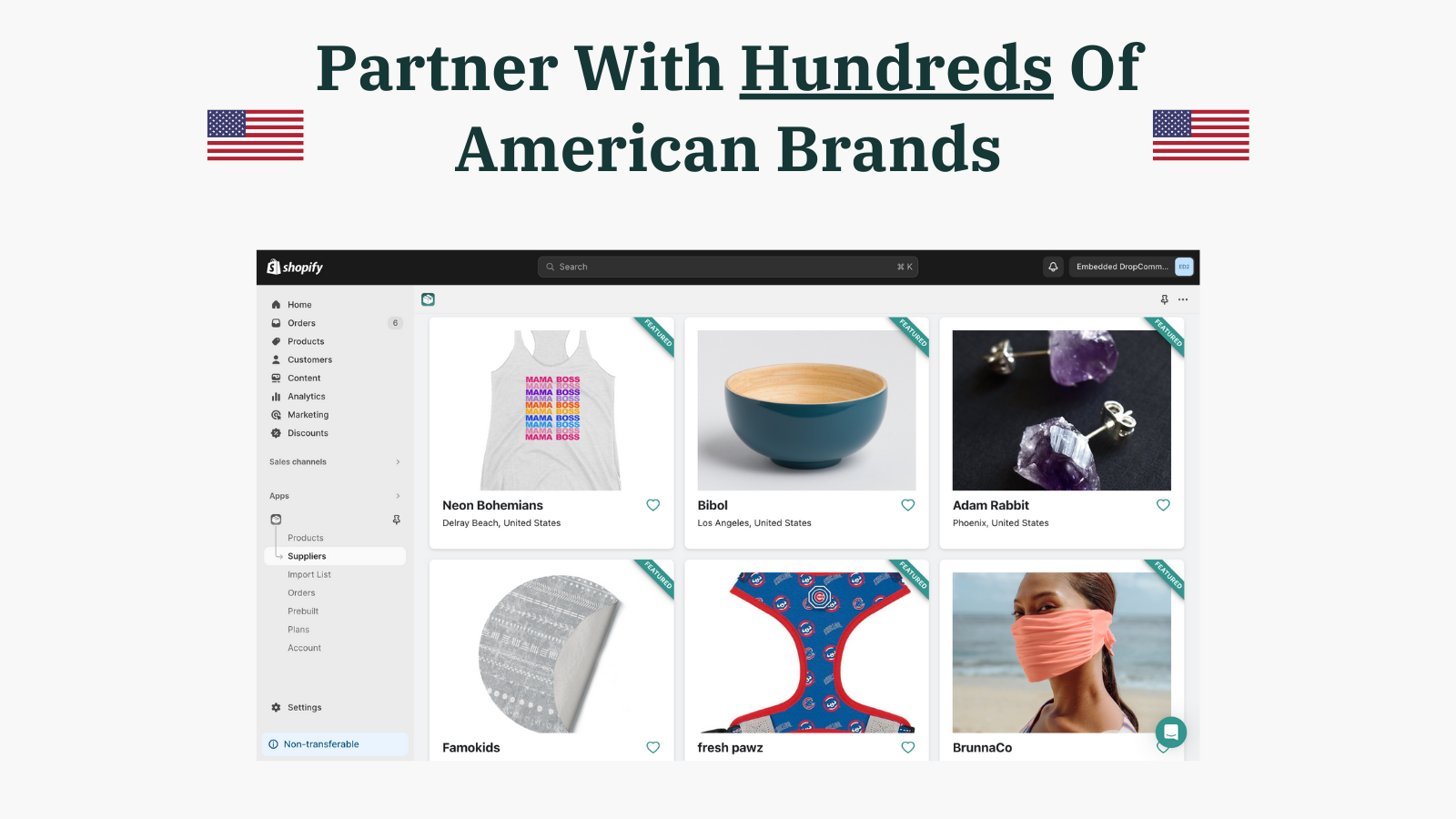
DropCommerce is a marketplace of hand-picked suppliers based in the US and Canada, plugged into your Shopify store. You browse their catalog (17-plus categories, from home and beauty to pet, health, and fashion), import the products you want with a click, set your own retail price, and sell. When a customer orders, you pay the supplier and they ship directly to your customer, usually in 2 to 7 days rather than the two-to-four weeks a China supplier takes. The whole pitch is in its listing: “Real brands with fast delivery,” positioned explicitly against Temu, DSers, AliExpress, and Oberlo.
The suppliers can be filtered by values that matter to a certain kind of store: made in the US or Canada, eco-friendly, organic, handmade, fair trade, women-owned, small batch. That’s the real draw. If you’re building a brand around quality and fast shipping rather than racing to the bottom on price, this is a very different starting point than the generic dropshipping route.
How does DropCommerce work, and how do you make money?
The money model is refreshingly clear, and it’s a genuine strength. DropCommerce takes no commission on your sales. By its model, suppliers offer their products at a minimum of 30% off the suggested retail price; you sell at that suggested retail (or higher), and your profit is the gap between what your customer pays and what you pay the supplier. You only pay the supplier after you’ve made a sale, so you’re never buying inventory up front. The app fee is a flat monthly subscription, not a cut of revenue.
The honest flip side: because the goods are real US and Canadian products rather than factory-direct from overseas, your raw product cost is higher, and so your margins are thinner than the eye-watering markups China dropshipping promises (and rarely delivers after returns). DropCommerce’s own argument is that better quality and faster shipping cut returns and chargebacks, which is a fair point, but you should go in expecting a quality-and-trust business, not a get-rich-quick one. Run the numbers before you commit: a 30% supplier discount is your entire margin envelope, and our profit margin calculator will show you what’s left after Shopify fees and ad spend.
How much does DropCommerce cost?
There’s a real free plan, then three paid tiers (the developer’s own site lists a fourth, higher tier not shown in the app).
| Plan | Price | Key inclusions |
|---|---|---|
| Free | $0 | Browse products and suppliers, order samples, import 25 products, live chat + AI support |
| Basic | $29/mo | Unlimited order fulfilment, no transaction fees, import 25 products, 14-day trial |
| Growth | $55/mo (or $349/yr) | Everything in Basic, import 250 products, branded invoicing, 14-day trial |
| Pro | $95/mo (or $499/yr) | Everything in Growth, import unlimited products, automated order fulfilment, priority support |
Two things to note. The free plan genuinely lets you browse suppliers, order samples, and test the waters before paying, which is the right way to try it. The Basic tier keeps the same 25-product import cap as the free plan, so the product allowance really opens up at Growth ($55). The developer’s website also lists an Executive tier at $149/month with a dedicated account manager, which isn’t shown inside the app. Annual billing saves up to 56% on the higher tiers.
What do merchants say about DropCommerce?
This is the section that earns the “honest” label, because DropCommerce’s 4.6 rating is lower than most apps we review, and the reason is a real split. The five-star reviews (80% of the total) love two things: the supplier quality and the support, with a support agent named Jimmy praised by name repeatedly, and the founder himself known to jump into live chats.
“One of the best dropshipping apps out there. The items are high quality, which does mean slightly higher prices, but the fast shipping and great customer service more than make up for it. Highly recommend.”
Calmly Elevated, United States, June 9, 2026 (7 months using the app), DropCommerce on the Shopify App Store
Now the one-star cluster, because there are seven of them and you should know the pattern before you install. Three themes recur:
- Billing and cancellation disputes. This is the single most common complaint: merchants charged after they thought they’d cancelled or uninstalled, and fights to get a refund. The developer’s consistent reply is that all billing runs through Shopify and they’ll issue refunds, but the volume of these reviews is a signal. Watch your billing carefully and cancel deliberately.
- Inventory and order sync. Complaints about items going out of stock, occasional products importing at the wrong price, or orders not syncing cleanly. The developer says they’ve invested in stronger inventory safeguards and sync reliability. As with any dropshipping app, stock lives with independent suppliers and can move.
- Margins. Some reviewers felt supplier prices were too high to profit. That’s the built-in trade-off of US and Canadian sourcing, not a defect, but it’s a real expectation to set. DropCommerce takes no cut itself; the price is the supplier’s.
Our read: DropCommerce is a genuinely good product for the merchant it fits, and the support is a real asset. But a 4.6 with a recurring billing-complaint pattern means you should treat the free plan as a real trial, keep a close eye on your subscription, and go in with honest margin expectations. That’s not a reason to avoid it; it’s a reason to install it with your eyes open.
Where DropCommerce shines
- Real US and Canadian suppliers. Faster shipping (2 to 7 days) and higher quality than overseas dropshipping, with value filters (eco, handmade, fair trade, women-owned) most platforms don’t offer.
- No commission. A flat monthly fee, no cut of your sales, and you only pay suppliers after a sale. No inventory risk.
- Genuine free plan. Browse, order samples, and import 25 products before paying a cent.
- Named, responsive support. Jimmy recurs across reviews, and the founder is known to step into chats personally.
- Brand-friendly. Branded invoicing on paid tiers, and a catalog built for stores selling on quality rather than price.
Where it falls short
- The billing-complaint pattern. Enough one-star reviews cite unexpected charges or cancellation friction that it’s worth naming plainly. Manage your subscription carefully.
- Thinner margins. US and Canada sourcing costs more, so the markups are modest. This is a quality business, not a cheap-goods arbitrage play.
- Inventory lives with suppliers. Stock can go out from under you, as with any dropshipping model. Sync isn’t flawless per some reviews.
- North America focused. The supplier base is US and Canada, so it fits North American stores best. No Built for Shopify badge, and the app is English only.
- The Basic tier’s 25-product cap. Same import limit as the free plan, so most serious sellers will need Growth ($55) or above.
Who is DropCommerce for?
It’s for the North American store owner building a real brand: someone who’d rather sell a quality product that arrives in three days at a modest margin than a $3 gadget that shows up in a month and gets returned. If your customers are in the US or Canada and your differentiator is trust and speed, DropCommerce’s supplier base is a strong fit. If you’re chasing the highest possible markup on cheap goods, this is the wrong tool, and you already know which apps do that.
One thing to plan for once you’re importing supplier products: catalog structure. Imported products often arrive as a separate listing per color or style, which clutters your collection pages and confuses shoppers. That’s exactly the problem we build for. Grouping those separate imported products into one listing with swatches keeps your storefront clean, and mapping the right image to each imported variant means the product card shows the colour the shopper actually picked. And before you scale ad spend on imported products, our look at the hidden cost of free Shopify apps is worth a read on keeping your stack lean.
The App Store link above is a referral link; see the disclosure near the top.
Frequently asked questions
Is DropCommerce free?
There’s a genuine free plan that lets you browse suppliers, order product samples, and import up to 25 products. Paid plans are Basic $29/month, Growth $55/month (250 products, branded invoicing), and Pro $95/month (unlimited products, automated fulfilment), each with a 14-day trial. DropCommerce takes no commission on your sales; you pay a flat subscription and pay suppliers only after a sale.
Is DropCommerce better than AliExpress dropshipping?
Different, not universally better. DropCommerce uses vetted US and Canadian suppliers with 2 to 7 day shipping and higher product quality, at higher product cost and thinner margins. AliExpress offers far cheaper goods with slower overseas shipping. If your customers are in North America and you’re building a quality brand, DropCommerce fits; if you want the lowest possible product cost, it doesn’t.
What are the margins on DropCommerce?
Suppliers offer products at a minimum of 30% off the suggested retail price, and you sell at that retail price or higher, so your margin is roughly 30% before Shopify fees and ad costs. It’s thinner than the markups advertised for overseas dropshipping, but the trade-off is faster shipping and fewer returns. Calculate your real margin after all costs before committing.
Why does DropCommerce have some one-star reviews?
The most common one-star complaint is about billing: merchants charged after they believed they’d cancelled or uninstalled, and refund disputes. Others cite inventory sync issues (items going out of stock) and supplier prices being too high to profit. The developer responds to most, points to Shopify-processed billing and refunds, and cites investment in sync reliability. Treat the free plan as a real trial and manage your subscription carefully.
Where are DropCommerce suppliers located?
DropCommerce’s suppliers are based in the United States and Canada, which is the core of its pitch: faster domestic shipping (2 to 7 days) and higher quality than overseas dropshipping. The company itself is registered in Kelowna, British Columbia, Canada, and focuses on the North American market.
Related reading

Umid
Co-Founder at Craftshift